
A pure piña barong costs what it does because nothing in the cloth was made by a machine. Pineapple leaves are scraped by hand, the fibres are knotted together one by one rather than spun, and the piña cloth is woven on a handloom, at about a quarter of a metre a day for pure piña.
We have not quoted prices. We could not find a reputable, recent source for them, and an old or vendor-supplied figure would mislead you more than help. If you need a number, ask an Aklan weaver or the producers’ association for a dated quote.
Why is a piña barong so expensive?
Because of how many slow, manual steps sit behind every metre. “Until today, the processing of piña is all done by hand,” as VERA Files put it in 2022, and that process is what you are paying for.
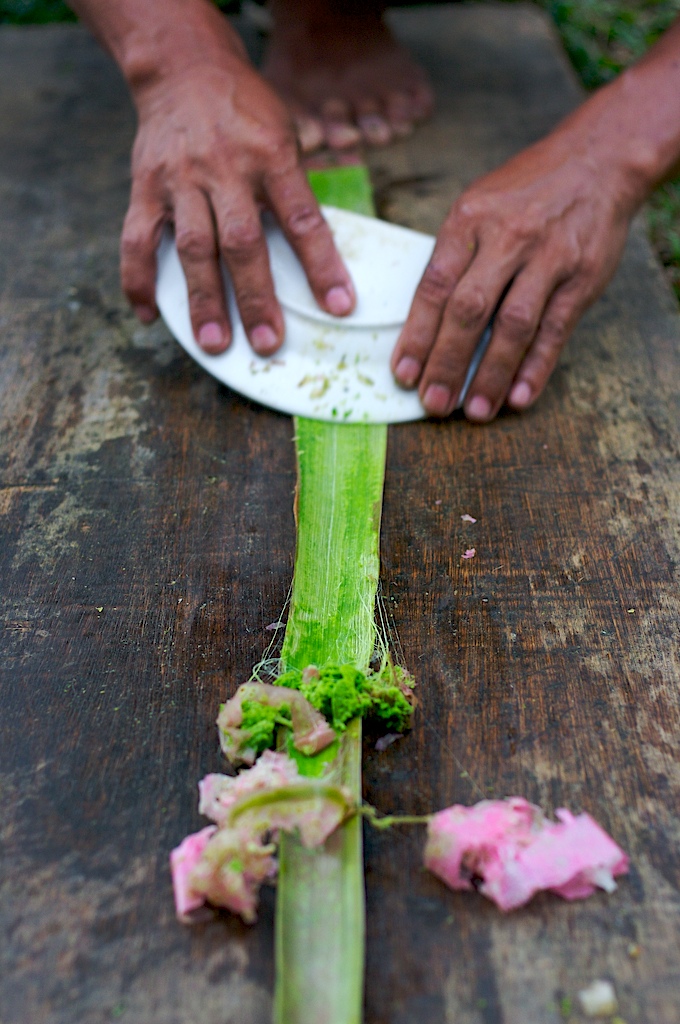
It starts with a particular plant: a local red-leaved cultivar known as Red Spanish, or pinya Bisaya, which Aklan State University researchers said in 2007 “produces more leaves of better fiber quality and adapted to local conditions.” Leaves are harvested by hand and scraped. The coarse outer fibre, bastos, comes off first, traditionally with the edge of a broken ceramic plate, and goes into twine, mats and stiffer cloth. The fine inner fibre, liniwan, is scraped out with a piece of coconut shell. Only the liniwan becomes fine piña. The fibres are then washed in cool water and dried on racks.
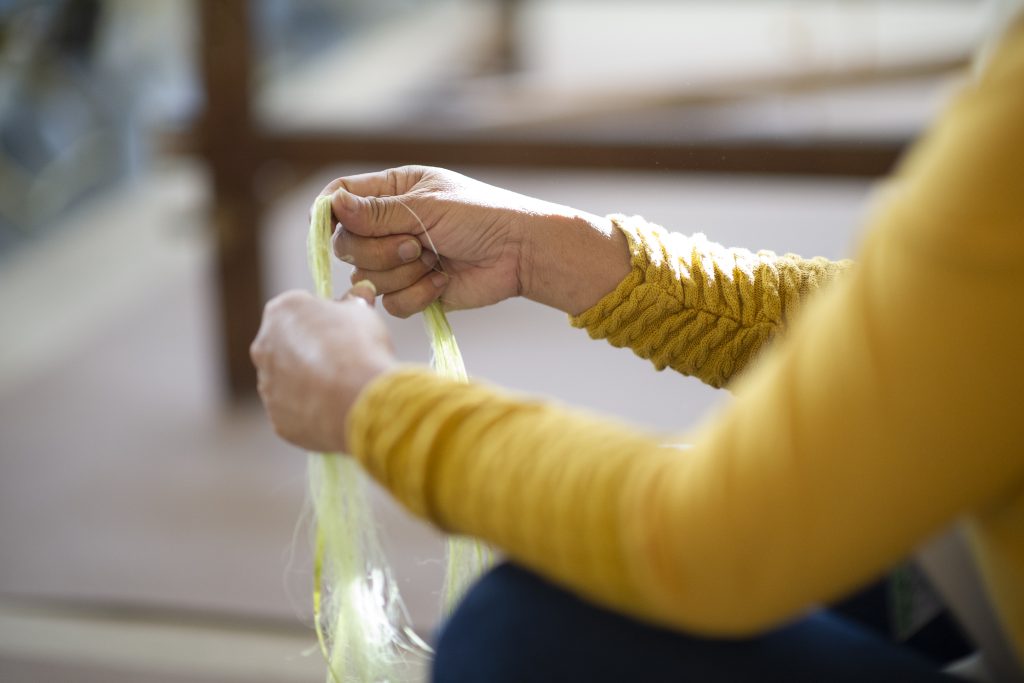
Next comes the step that sets piña apart from almost every other cloth you will buy. The fibres are not spun into yarn. Each one is knotted to the next, end to end, by hand, until there is a strand long enough to wind onto bobbins and warp a loom. Filipinos were already knotting abacá this way before the pineapple arrived from South America with the Spanish in the 16th century.
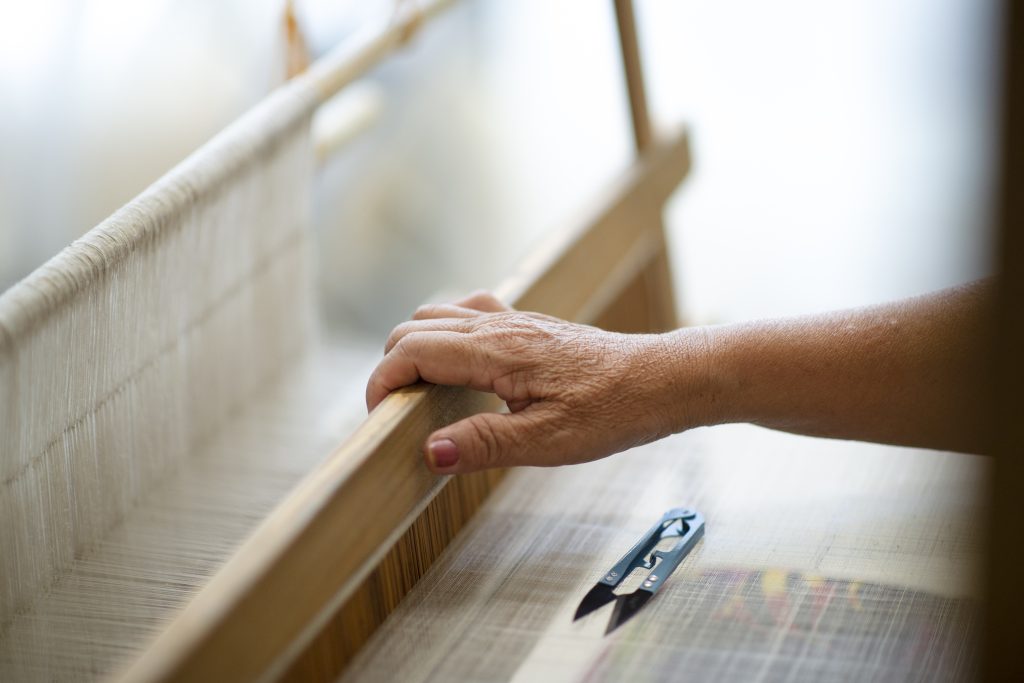
Then the weaving, on a double-treadle handloom. In weaving villages the work is often split between scrapers, knotters and weavers, and Radar, citing the Philippine Textile Research Institute (DOST-PTRI), reports that at least four people work on one garment and that an embroidered piña-seda barong can involve up to 17. Kalibo weaver Anna India Dela Cruz-Legaspi told the NTFP Exchange Programme in 2015 that pure piña comes off the loom at about a quarter of a metre a day. Measure the front of a barong against that and the price starts to make sense.
Fibre supply may also be a factor. Tatler Asia, citing figures from the Philippine Fiber Industry Development Authority, reported in 2026 that commercial piña baling came to only 72.955 metric tonnes, a yield it called “microscopic”. And embroidery, if the barong has any, is a separate round of handwork on top (see below).
None of this is new. Piña was a luxury export worn by European aristocracy in the 18th and 19th centuries, and UNESCO, which added Aklan piña handloom weaving to its Representative List of the Intangible Cultural Heritage of Humanity in December 2023, calls piña “the most highly regarded of the traditional textiles of the Philippines. It is the preferred textile for making formal attire”. It has long been the expensive option.
Then why are some “piña” barongs cheap?
Usually because they are not pure piña, and sometimes because they are not piña at all.
Blends are common. Piña-seda, piña woven with silk, is the commonest contemporary blend, and Aklan producers also mix piña with abacá and cotton. PieceWork magazine describes piña woven with silk or cotton as “a less expensive fabric”. A blend is a legitimate product. It only becomes a problem when it is sold to you as pure piña.
At the other end are look-alikes. Wikipedia, drawing on vendors and a 1992 University of the Philippines monograph, describes jusilyn, a machine-woven silk or cotton and polyester cloth made to resemble jusi, and says it can be “chemically painted” and passed off as piña or piña-seda. We could confirm that only from that one aggregated source, but it is worth knowing about.
One more category to set aside: the “pineapple fibre” fabrics in international fashion. According to PieceWork, these are made from waste leaves of commercial sweet pineapple, sometimes processed by machine. They are a different material from hand-knotted piña cloth, whatever the label says.
Is it real piña? How to check
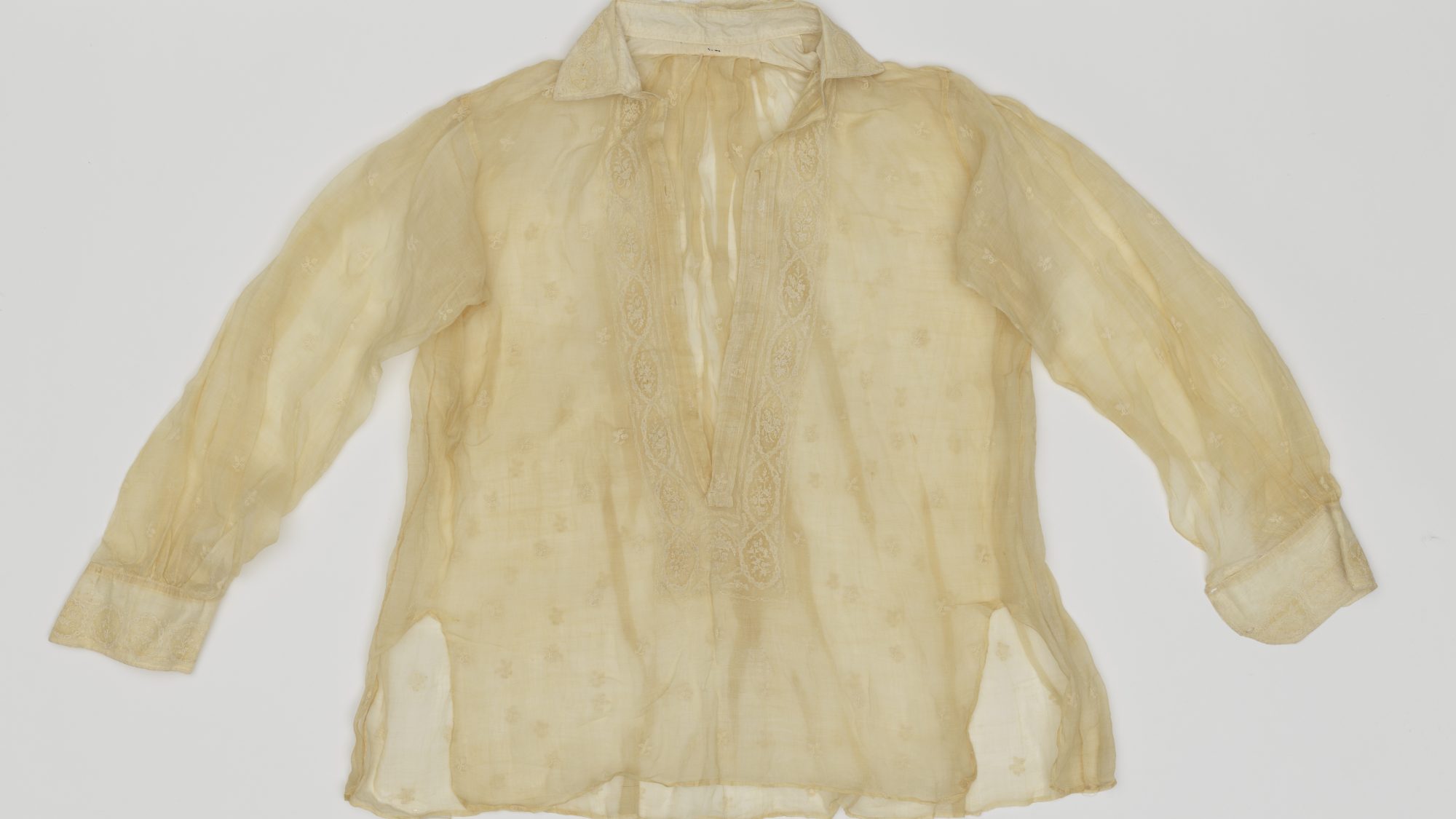
You can’t prove it by eye, but you can narrow it down. Real piña is “sheer, stiff, light and lustrous”, in the Victoria and Albert Museum’s words, with a natural ivory or yellowish tinge. Wikipedia, citing earlier reporting and vendors, says pure piña tends to look streaky because its fibres vary in thickness, while jusilyn has an even texture with no streaks. By that account, very even, opaque cloth is more likely machine-made.
Do not do a burn test. No reputable source gives one for piña, a flame cannot tell piña from cotton, abacá or other plant fibres, it cannot identify a blend, and it destroys the fabric you are trying to buy.
The more reliable check is paperwork. Ask the seller to state the fibre content in writing (pure piña, piña-seda or another blend) and where the cloth was woven. For Aklan cloth, ask about the Aklan Piña Geographical Indication. The Intellectual Property Office of the Philippines presented the GI certificate in Kalibo in September 2025, and the Daily Guardian reported that it requires genuine products to meet a manual of specifications covering raw-material sourcing, fibre extraction, traditional weaving and labelling, with the stated aim of preventing counterfeits. We have not seen how the GI mark appears on retail goods, so ask the seller to show you.
Before you pay
Fibre content, in writing: pure piña, piña-seda or another blend. Origin: where it was woven, and for Aklan cloth, whether it carries the Aklan Piña GI. Look and feel: sheer, stiff, light, ivory-tinged and slightly streaky points towards piña; even and opaque points away from it. Embroidery: ask who embroidered it and where. No burn test. It proves nothing and ruins the cloth.
What’s piña-seda? And what on earth is jusi?
Piña-seda is piña and silk woven together. It is the blend you are most likely to be offered, and it is a real piña product, just not a pure one. A 2018 barong in the Victoria and Albert Museum’s collection is described as “silk and pineapple plant fibre”.
Jusi is the slippery one. Sources disagree on what it is. It has been described as a sheer abacá cloth, as fine abacá woven with piña, silk or cotton, and, by present-day vendors, as a machine-woven silk or cotton and polyester fabric. Our reading is that jusi has historically been tied to abacá or silk, and that most cloth sold as jusi today is machine-woven, often with polyester. The practical upshot is the same either way: if the tag just says “jusi”, ask what it is made of.
You may also hear nipis, which simply means “thin”. It is the umbrella term for sheer, stiff, lustrous fabrics such as piña, fine abacá and jusi, so a “nipis” barong is not necessarily piña.
Who did the embroidery?
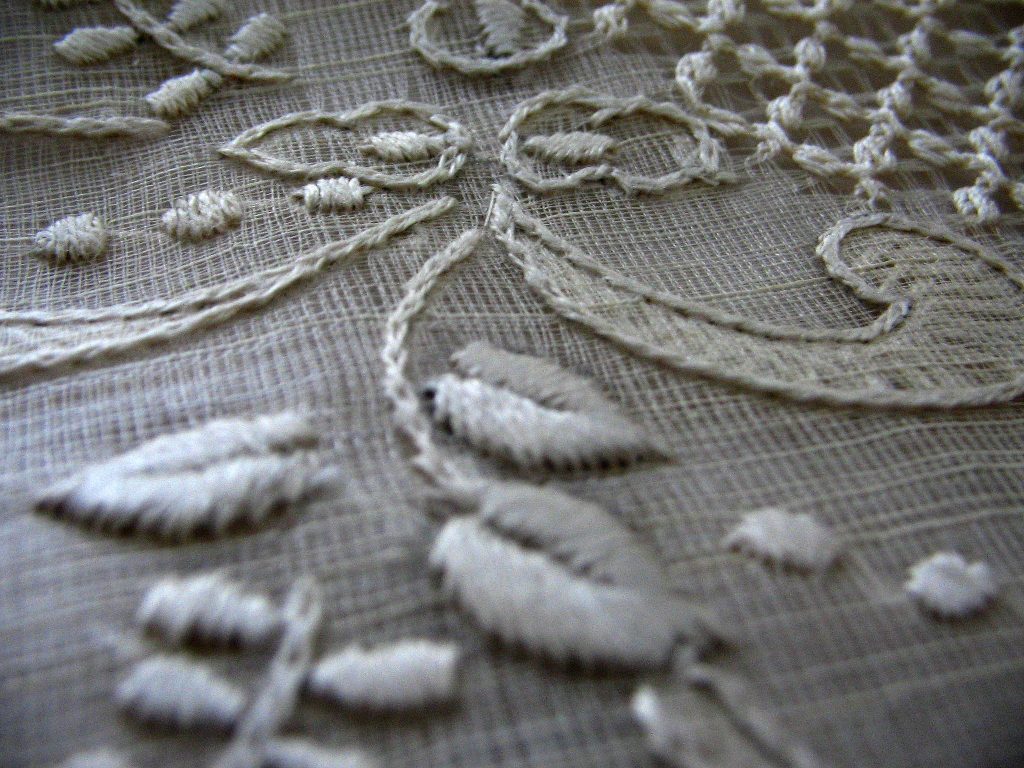
It matters, because hand embroidery is a second round of handwork on top of the weaving. The best-known technique is calado, openwork in which selected threads are drawn out of the cloth and the remaining threads stitched into patterns. Embroiderers in Lumban, Laguna, keep it alive; the V&A describes it as a mix of indigenous craft and European techniques learnt in Spanish-era mission schools. Taal, Batangas, is another embroidery centre, with its own burdang Taal, which we touched on in our day trip to Taal. VERA Files says piña is embroidered “mostly in Manila, Lumban, Laguna, and Taal, Batangas nowadays”, so cloth woven in one place and embroidered in another is normal, and a seller should be able to tell you both.
Where should I buy?
As close to the weavers as you can get. Kalibo, Aklan, is the historic and present-day centre of piña weaving. Producers with recent public records include La Herminia Piña Weaving in Kalibo, profiled by HABI with awards from 2023; Raquel’s Piña Cloth Products and Bandiola Piña Weaving in Balete; and the Handicrafts of Aklan Multipurpose Cooperative (HAMPCO) in Kalibo, all three visited by the Philippine Fiber Industry Development Authority. The producers’ association, the Aklan Piña & Indigenous Fibers Manufacturers and Traders Association (Aklan Piña Mantra), led by Anna India Legaspi, received the GI certificate in 2025 and is a sensible first call for a quote.
If you can’t get to Aklan, look for craft fairs that work directly with makers. Tatler Asia named Likhang HABI, ArteFino and MaArte in 2026, and the Department of Trade and Industry brought 36 Aklanon businesses to its Aklan Product Expo at SM City Iloilo in October 2025. Fair dates change every year, so check the organisers’ current schedules.
Does the law say government workers must wear piña?
No. Republic Act 9242, the Philippine Tropical Fabrics Law of 2004, requires official government uniforms to use Philippine fabrics made with natural fibres. Under the rules amended in 2023, that means a natural fibre component of at least five per cent by weight, certified by DOST-PTRI. Pineapple is one of the fibres that counts, but the law names neither piña nor the barong, and it does not apply to what you buy for a wedding.
Is pure piña worth it? That depends on what you want it for. In our view, if you are buying one barong to wear for decades, pure or piña-seda from a named Aklan producer, with the fibre content in writing, is money spent on exactly what the label says. A cheap “piña” with no paperwork is the one purchase here we would walk away from.
Sources
- UNESCO, “Aklan piña handloom weaving“, Representative List of the Intangible Cultural Heritage of Humanity, 2023
- Rappler, “Aklan’s piña handloom weaving gets UNESCO recognition as cultural heritage“, 6 December 2023
- Daily Guardian, “Aklan piña weaving earns GI status“, 23 September 2025; “Woven with pride: Aklan’s craftsmanship shines at 2025 Product Expo“, October 2025
- Kathleen Bennett, “Discover the remarkable process of turning pineapple leaves into beautiful fabric“, PieceWork, 13 October 2025
- R.C. Ladrido, “Piña: The queen of Philippine handwoven textiles“, VERA Files, 27 May 2022
- Victoria and Albert Museum, “The Barong and beyond: Piña textiles at the V&A“
- The Philippine Star, “Research boosts Aklan’s piña cloth industry“, 11 March 2007
- NTFP Exchange Programme, “Philippine weaving traditions featured in 12th annual International Folk Art Market“, July 2015
- PhilFIDA, “PhilFIDA visits pineapple fiber production farm and weaving communities in Aklan“; HABI, “HABI’s Helping Hands: La Herminia’s handwoven legacy“
- Radar.ph, “The business resurgence of pineapple fiber opportunities“; Tatler Asia, “The value of craft, part one“
- Republic Act No. 9242 (2004); Civil Service Commission, Amended Implementing Rules of RA 9242 (2023)
- Wikipedia, Piña, Barong tagalog and Abacá