
What is it about a 1979 Manila Sound record called “Bongga Ka ‘Day” that it could still carry a full stage musical in 2026?
Because it did, and it was not alone. On 8 August 2026, Newport Theater held a one-night Hotdog tribute concert, Manila, Manila, reuniting Hotdog members Maso Diez-Rivera, Gina Montes-Infante and Rita Saguin-Trinidad. In September, Newport Performing Arts Theater opened Bongga Ka, ‘Day!: The Annie Batungbakal Musical, a jukebox show built from Hotdog songs, set in 1970s Manila and starring Atasha Muhlach as Annie, with its gala on 25 September. It had been due to open in June 2020 until the pandemic shelved it. The show was billed for a September-to-October run, and by 9 November Tatler Asia reported that Newport had wrapped it up.
This is an opinion piece. The argument below is Wow Manila’s; the facts it rests on are listed in the sources at the end.
Our argument: it sounded like Manila talking
Nostalgia explains some of this. We don’t think it explains most of it. Every decade has its oldies, and most of them don’t get musicals. Our view is that the Manila Sound keeps coming back because it was the first time Filipino pop sounded like the way people in Manila actually spoke, and that hasn’t dated the way a production style dates.
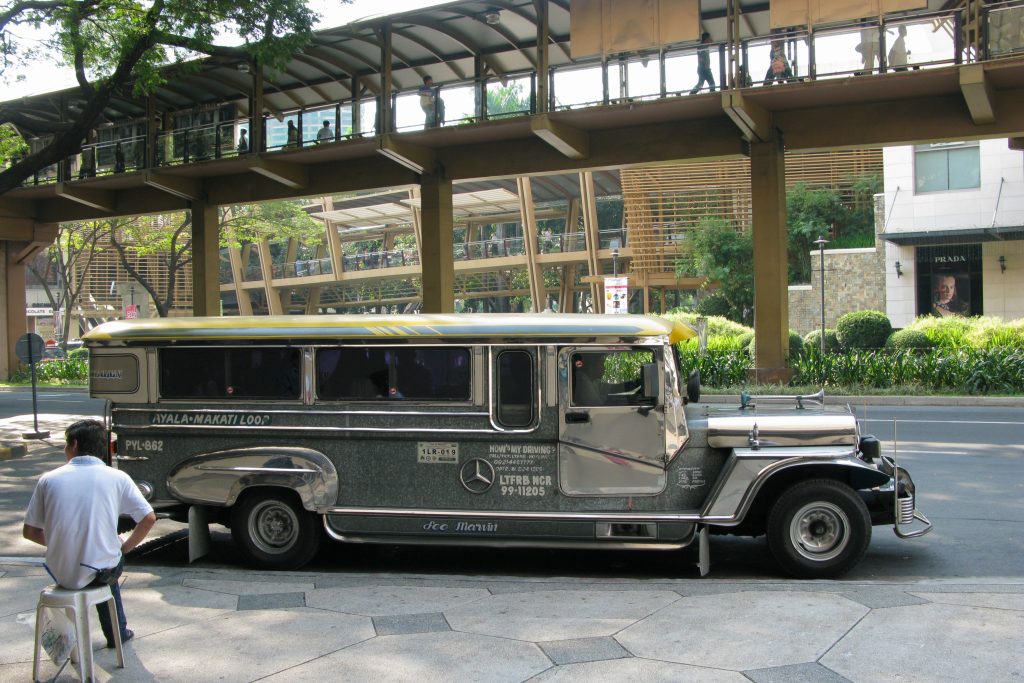
The genre took shape in Metro Manila in the early-to-mid 1970s, and Wikipedia’s summary of it lists catchy hooks, lyrics in Tagalog, English and Taglish, a light and often joking tone, and songs about ordinary city life. Look at the titles alone. “Pers Lab”. “Beh, Buti Nga!”. “Macho Gwapito”. “T.L. Ako Sa’yo”. “Bongga Ka ‘Day”. These aren’t poetry. They read like things shouted across a jeepney or typed into a group chat half a century before group chats, and that, we think, was the appeal, not a flaw.
The Manila Sound is often called the “bright side” of martial law, since it peaked in the mid-to-late 1970s under Marcos. That framing isn’t wrong, but we think it sells the music short, as if its main job had been to distract. Its lasting contribution, as we read it, was linguistic: it proved that everyday Manila speech, mixed languages and all, could sell records.
Hotdog wrote the city a theme song
The band at the centre of the argument is Hotdog, formed by brothers Dennis Garcia (bass, and the main lyricist) and Rene Garcia (lead guitar and vocals), with Ella del Rosario singing lead. Their first album, Unang Kagat, came out on Villar Records in 1974. Band member Mon Torralba told The Philippine Star in July 2026 that their first recording, “Ikaw ang Miss Universe ng Buhay Ko”, had been turned down by other labels before Villar took it. Whatever the labels’ reasons, a title that calls your sweetheart the Miss Universe of your life is hard to imagine as anything but a hit now.
Then came “Manila”, which Wikipedia says topped radio charts in 1976. According to Wikipedia, citing a 2020 ABS-CBN interview we could not read in full, Dennis Garcia said the spark was American city songs, Tony Bennett’s “I Left My Heart in San Francisco” and Sinatra’s “New York, New York”. If that account is right, it is the clearest case for our argument: the model was other cities’ anthems, and Hotdog wrote Manila one in its own language, jeepneys included.
Torralba himself is modest about where that leaves the band:
“We weren’t the seed of OPM because OPM already existed. But we became one of its roots.”
Mon Torralba of Hotdog, in The Philippine Star, 17 July 2026
We’d accept that. The term OPM itself is widely credited to Danny Javier of the APO Hiking Society, whose band were contemporaries of the Manila Sound acts rather than part of the disco wave. If you suspect radio forced this music on listeners, note that the best-known airplay quota came later. Executive Order No. 255, signed by Corazon Aquino on 25 July 1987, a decade after the genre peaked, requires stations with musical programmes to broadcast “a minimum of four original Pilipino musical compositions in every clockhour”, counting a work as Filipino if a Filipino composed it, whatever the language of the lyrics. It is often misremembered as a Marcos-era policy. Whether a smaller quota existed in the 1970s, we could not confirm, so radio’s part in the original boom remains an open question.
Where the argument runs out
To be fair to the other side: by Wikipedia’s account, the later years of the sound were dominated by disco, and not all of it was conversational. Hagibis, which Wikipedia says was put together by Mike Hanopol and record executive Vic del Rosario, was modelled on the Village People. Wikipedia’s history of the genre says camp and parody lyrics, imported soundtracks such as Saturday Night Fever and Grease, and the global collapse of disco pushed listeners towards ballads and adult contemporary by the early 1980s. Plenty of the Manila Sound is simply dance music, and the joke wore thin.
The other uncomfortable fact is that the revival comes after the losses. Rene Garcia died on 2 September 2018 and Rico J. Puno on 30 October 2018. Dennis Garcia died on 18 January 2020. Danny Javier died in late October 2022. (The Garcia brothers’ deaths are often mixed up online; Rene died first.) A tribute concert in 2026 was partly a tribute in the literal sense, and we won’t pretend grief plays no part in the comeback.
Still, the songs had been coming back before then. According to Wikipedia, the Philippine Daily Inquirer credited Kala’s 2005 single “Jeepney” with reviving the sound, followed by the tribute album The Best of Manila Sound: Hopia Mani Popcorn in 2006. Cinderella’s “T.L. Ako Sa’yo” was covered by Jolina Magdangal and Marvin Agustin in 1997 and by Kitchie Nadal in 2007. Each new generation seems to find the same thing: these songs still sound like the people singing along.
Ten songs that make the case
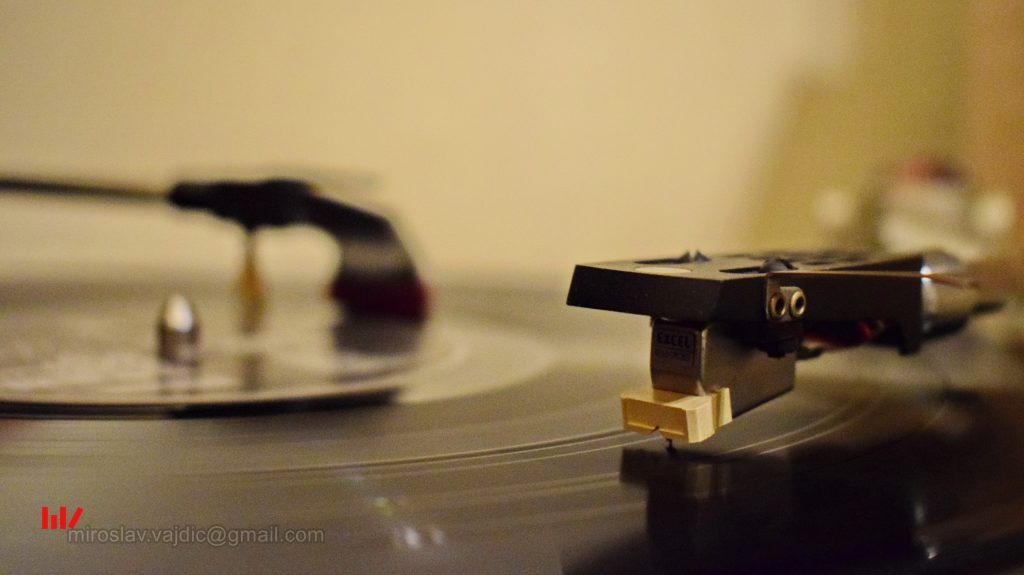
If you want to test the argument yourself, play these in order. Each is here for a reason.
- “Ikaw ang Miss Universe ng Buhay Ko”, Hotdog. Hotdog’s first recording, the one the other labels passed on. Start where the band started.
- “Manila”, Hotdog (1976). A city song in Manila’s own language, and the core of our argument.
- “Bato sa Buhangin”, Cinderella (1976). The theme of the Fernando Poe Jr. and Vilma Santos film of the same name, and a sign, we’d argue, of how far into the mainstream the sound had travelled by 1976.
- “T.L. Ako Sa’yo”, Cinderella. Cinderella’s best-known single, with a title in pure text-speak decades early. Then play the 1997 Jolina Magdangal and Marvin Agustin cover and judge how much it needed changing.
- “Macho Gwapito”, Rico J. Puno. A crooner with a wink, singing a title you could only get away with in Manila.
- “Awitin Mo at Isasayaw Ko”, VST & Company (1978). Lyrics by Joey de Leon, melody by Vic Sotto, according to Wikipedia, which cites a TV5 interview with de Leon. It was released as the B-side of “Ikaw ang Aking Mahal”, which says a lot about how hard hits are to predict.
- “Sumayaw, Sumunod”, Boyfriends. The smoother end of the disco years, and, we’d argue, a reminder that the dance floor was where the language travelled furthest.
- “Katawan”, Hagibis (1979, per Wikipedia). The camp peak, and the counter-argument in one song. It later became the theme of ABS-CBN’s Palibhasa Lalake, according to Wikipedia, which tells you the joke outlived the decade.
- “Annie Batungbakal”, Hotdog (1979). A character song strong enough that a 1979 film was loosely based on it, which Wikipedia describes as a take-off of Saturday Night Fever, and gave the 2026 musical its heroine.
- “Bongga Ka ‘Day”, Hotdog (1979). The answer to the question we opened with. (Some older articles date it 1974; a 1979 single listing and other sources put it in 1979.)
Then, for contrast, put on Freddie Aguilar’s “Anak”, from the same years. It was a finalist at the first Metro Manila Popular Music Festival and did not place, and Wikipedia now calls it one of the most popular Philippine pop songs ever. It sounds nothing like the Manila Sound, which is rather the point: Filipino pop was already going in more than one direction.
Sources
- “The sound that made Manila sing“, The Philippine Star, 17 July 2026
- “’70s Manila Sound to be revived“, PhilSTAR L!fe (The Philippine Star is a co-producer of the musical); “Liza’s ‘Bongga’ night for the arts“, Daily Tribune, 28 September 2026; “Newport World Resorts to stage ‘& Juliet’, ‘Kailangan Kita’ and ‘Alikabok’ in 2027“, Tatler Asia, 9 November 2026
- “Hotdog tribute concert“, Rolling Stone Philippines, 14 July 2026
- “Hotdog band member Rene Garcia dies“, Rappler, 3 September 2018
- “Rico J. Puno, OPM legend, 65“, The Philippine Star, 31 October 2018
- “Hotdog frontman Dennis Garcia passes away, 69“, The Philippine Star, 19 January 2020; “Filipino musician Dennis Garcia of Hotdog dies aged 69“, The National
- “APO Hiking Society’s Danny Javier: ‘The man who coined OPM’“, The Philippine Star, 2 November 2022
- Executive Order No. 255, 25 July 1987 (full text, Lawphil)
- Wikipedia: Manila sound, Hotdog, Manila (song), Annie Batungbakal, Awitin Mo at Isasayaw Ko, Bato sa Buhangin, Hagibis, Cinderella, Metro Manila Popular Music Festival