
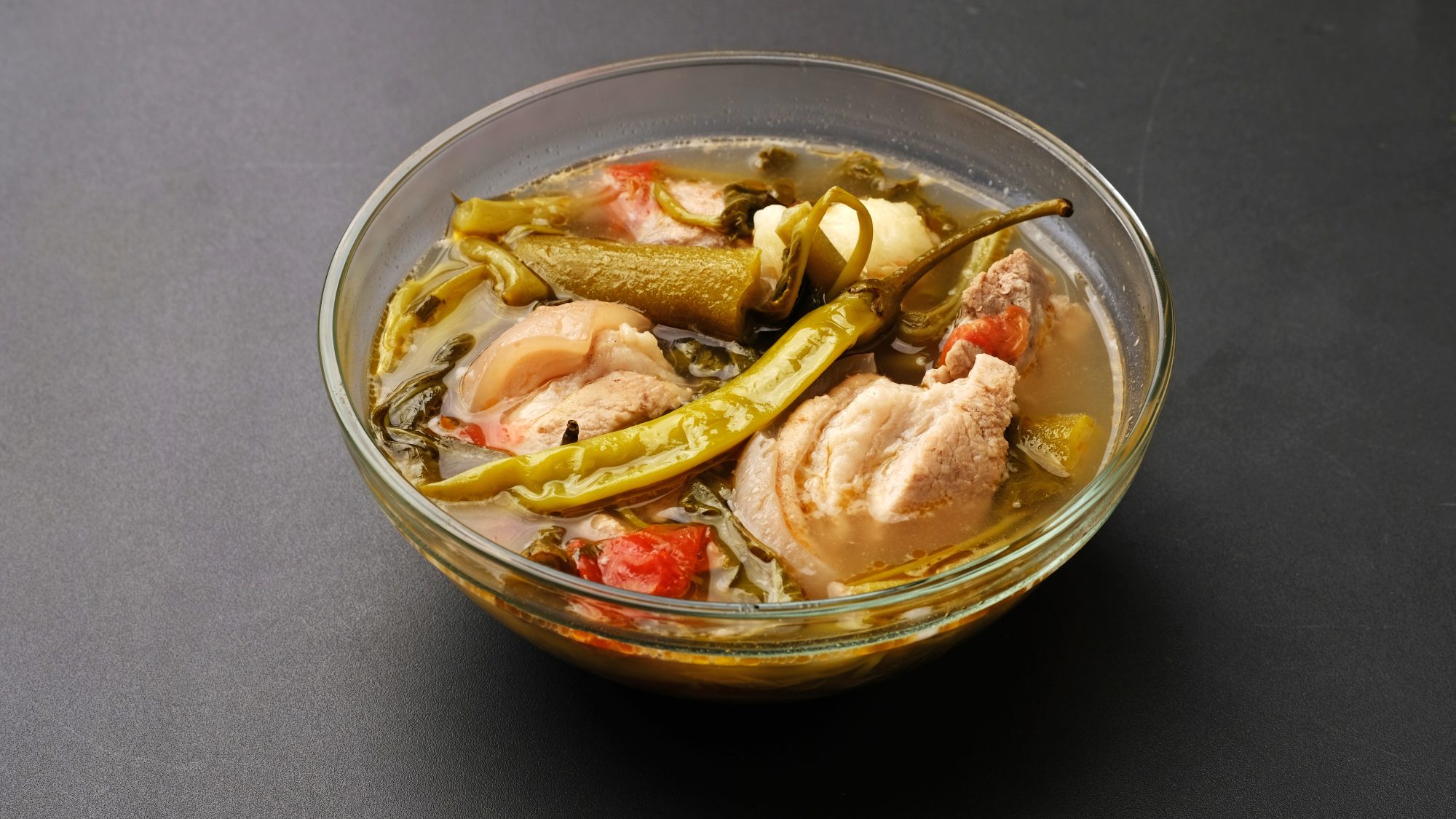
The word sinigang has nothing to do with sourness. It is the nominalised form of the Tagalog sigang, “to stew”. The sourness comes from whatever the cook puts in the pot, and sinigang souring agents have never been limited to tamarind. Historically the name covered any meat or seafood cooked in a sour broth, and the fruit chosen decided what that broth tasted like, which part of the country it belonged to, and sometimes whether it was called sinigang at all.
Claude Tayag’s definition, from a 2012 column in The Philippine Star, leaves the door open: sinigang is “a clear-broth soup dish flavored with a sour fruit or the young, acidic leaves of a fruit-bearing tree.” Dishes are named for the protein (sinigang na baboy), the sour (sa sampalok, sa bayabas), or both. The entries below take the sours one at a time, in the same three parts each, so you can set them side by side.
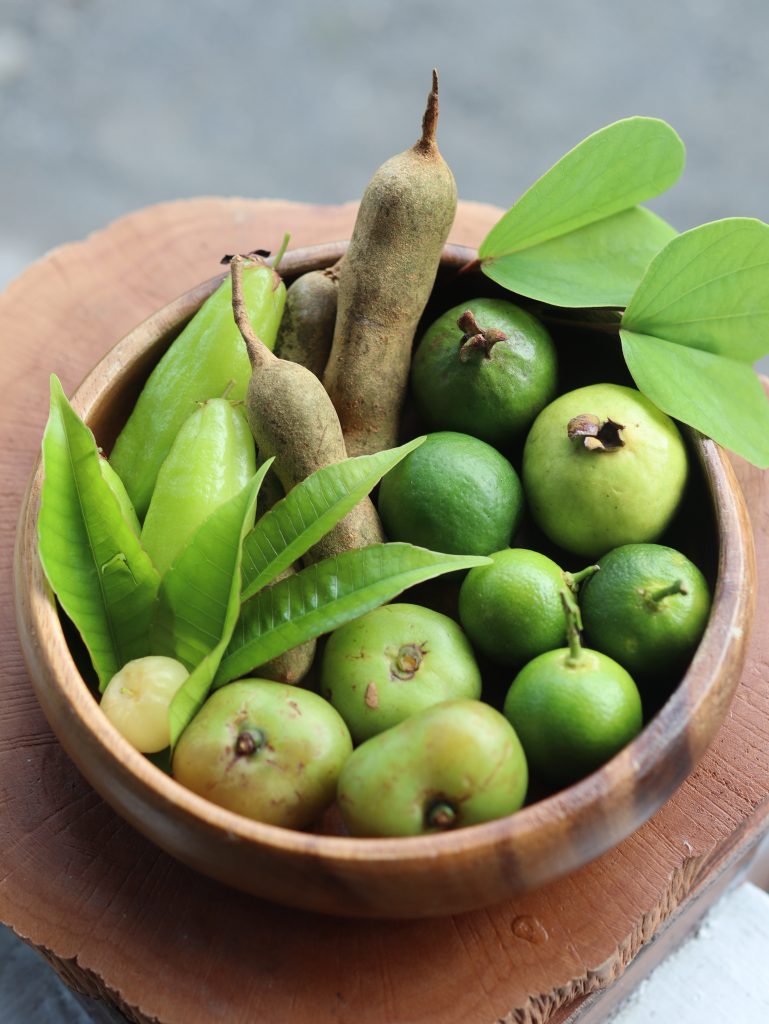
Picked green
Sampalok (tamarind)
What it is. Tamarindus indica, which is not native to the Philippines. Cooks traditionally use the young green pods, boiled soft, mashed in a little broth and strained back in. In the Philippines the fruit is in season from May to December, peaking from August to October, according to the plant reference PROSEA.
Where it’s used. Everywhere. It is the national default, and the base of most instant mixes.
What it does to the pot. A strong, fruity sourness, most familiar in pork sinigang. The tree’s young leaves sour a pot too, most famously in sinampalukang manok, a chicken soup usually counted as its own dish rather than a kind of sinigang.
Kamias (bilimbi)
What it is. Averrhoa bilimbi, a small, finger-shaped fruit that grows in clusters straight off the trunk. StuartXchange, the Philippine medicinal-plant database, describes it as introduced and believed to be native to the Maluku Islands.
Where it’s used. It is a backyard tree, common outside Metro Manila, and Tayag lists it among the sours of Tagalog and Southern Tagalog cooking.
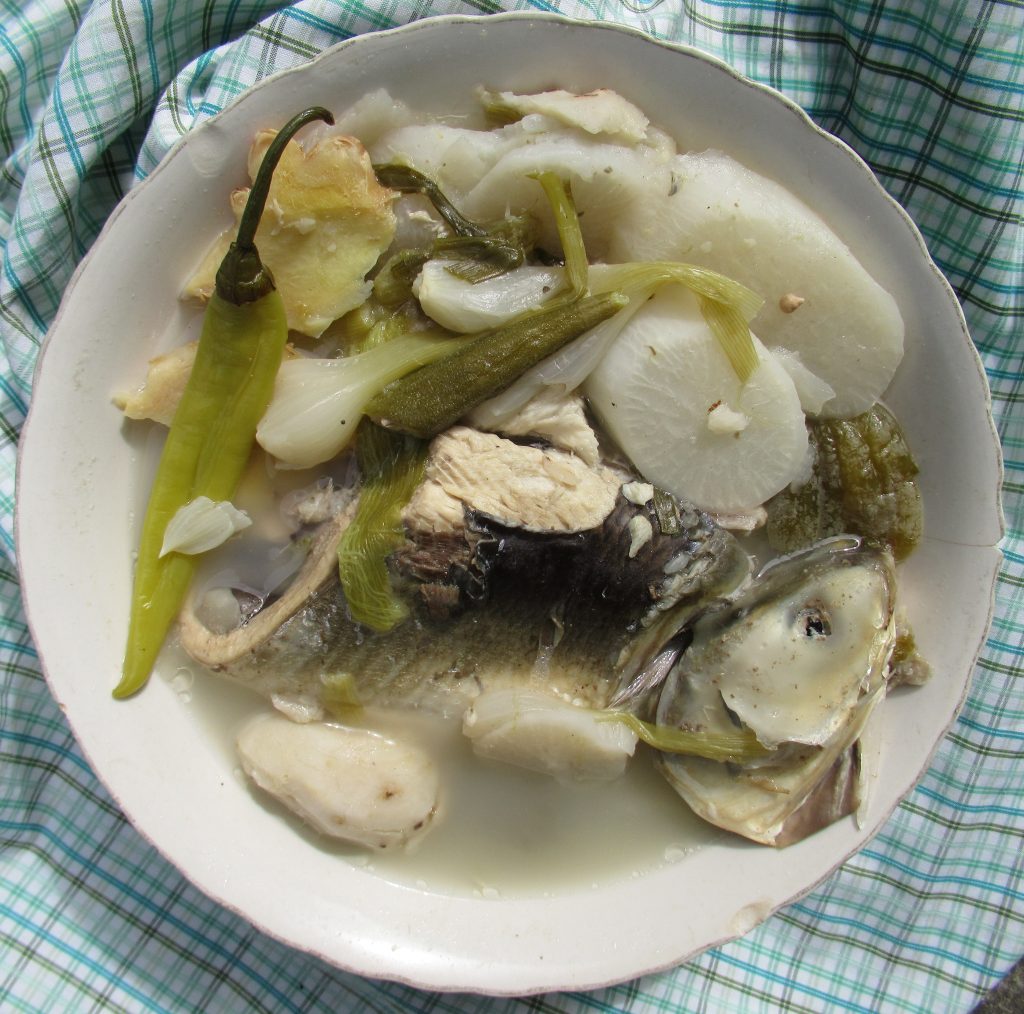
What it does to the pot. Cooks tend to reach for it with fish and shrimp, as in sinigang na bangus sa kamias.
Manggang hilaw (green mango)
What it is. Unripe Mangifera indica.
Where it’s used. Nationwide, as sinigang sa mangga.
What it does to the pot. Pepper.ph calls it a “sharp, mouth-puckering sourness”.
Santol
What it is. Sandoricum koetjape, used unripe or half-ripe for its sour flesh. In the Philippines it fruits roughly from July to October.
Where it’s used. As sinigang sa santol, often with bangus.
What it does to the pot. Sour flesh, plus one hazard the other fruits don’t carry: doctors have warned that swallowed whole santol seeds can block or perforate the intestine. Scoop them out before the pot reaches the table.
Used ripe: bayabas
What it is. Guava, Psidium guajava, which reached the Philippines with the Manila–Acapulco galleons. Unlike the green sours above, it goes into the pot ripe: Tayag and Pepper.ph both describe ripe fruit, and ripe is the convention.
Where it’s used. Tagalog cooks call the dish sinigang sa bayabas. In Pampanga it is bulanglang, treated as a dish in its own right.
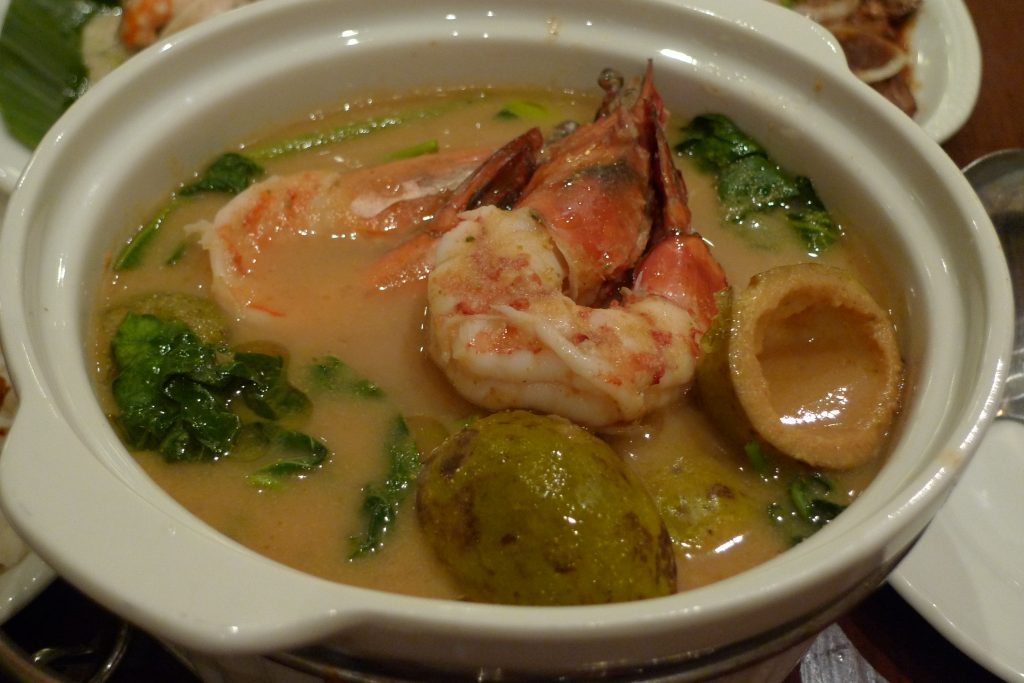
What it does to the pot. Tayag writes that ripe native guava makes the broth “sweetish and pink-colored”. The Kapampangan bulanglang he describes takes crab and, in season, river prawns (ulang).
By the drop: calamansi and tomato
Calamansi
What it is. Citrus × microcarpa, the Philippine lime.
Where it’s used. As sinigang sa kalamansi, and as the light sour in Lucena’s cocido and the Central and Eastern Visayan tola.
What it does to the pot. Very little, by design. Tayag describes cocido as only “very mildly sour”, made with a few drops of calamansi and tomato.
Kamatis (tomato)
What it is. Ordinary tomato.
Where it’s used. In nearly every pot of sinigang, whatever the main sour.
What it does to the pot. A soft acidity and an orange tint. It rarely carries the sourness on its own, except in the mild cocido and tola styles.
Leaves, not fruit: alibangbang
What it is. The young, butterfly-shaped leaves of a Bauhinia-type tree, usually identified as Piliostigma malabaricum (syn. Bauhinia malabarica). Be sure of your plant before you pick: StuartXchange notes that the name alibangbang is also applied to Bauhinia monandra.
Where it’s used. StuartXchange lists it as a flavouring for meat and fish in sinigang and sinampalukan. A Market Manila reader describes cooks in some Tagalog provinces using it in chicken and dalag (mudfish) sinigang in place of young tamarind leaves.
What it does to the pot. It does the job of young tamarind leaves: a leaf sourness rather than a fruit one.
Western Visayas: libas and batwan
Libas (hog plum)
What it is. Spondias pinnata, one of the sours that is not an import.
Where it’s used. In Iloilo, as the usual souring agent for linaga, a beef soup.
What it does to the pot. It sours linaga, which the Ilonggo chef quoted below does not count as sinigang.
Batwan
What it is. Garcinia binucao, a relative of the mangosteen and indigenous to the Philippines: a small round fruit, 4 to 5 cm across, that starts green and turns yellow. Slow Food’s Ark of Taste says it grows wild in the forests of Panay and Negros and fruits abundantly in the wet season. It is sold bottled, brined, puréed and powdered.
Where it’s used. Mainly Western and Eastern Visayas, in kansi (beef shank with young jackfruit), KBL (kadyos, baboy, langka), paksiw and fish tinola.
What it does to the pot. Slow Food describes the taste as “sour, but not acidic”.
This is the one entry where the name of the dish is in dispute. Slow Food’s entry calls the batwan-soured broth sinigang, and the Manila food blog Market Manila has published a recipe for sinigang na batuan at bangus. At least one Ilonggo chef disagrees. Interviewed by The Philippine Star in 2024, he put it plainly:
“It’s a Tagalog thing. Ilonggos use Batwan as a souring agent, but we do not cook Sinigang with it. We cook Kansi and use Batwan as its souring agent. If we want to eat beef boiled in soup, we make Linaga but we usually use Libas as souring agent for Linaga and not Batwan, and we do not call it or consider it as Sinigang.”
Chef Rafael “Tibong” Jardeleza Jr., quoted in The Philippine Star, 10 November 2024
Tayag, writing about batuan in Western Visayas in 2012, went further: “nobody — but nobody — calls it sinigang anywhere in the Visayas.” We think both readings can stand. A Manila cook who drops bottled batwan into pork and kangkong has made a batwan-soured sinigang. An Ilonggo cook using the same fruit has made kansi or KBL, and by these accounts would rather you called it that.
Not a souring agent: miso
Sinigang sa miso, usually made with bangus and mustasa (mustard greens), gets its name from the fermented soybean paste, but the paste is not what makes it sour. Miso adds salt and savouriness on top of a tamarind or other fruit base. If a pot of sinigang sa miso is not sour enough, the fix is more sampalok, not more miso.
And the packet
Many kitchens now skip the fruit entirely and use a tamarind-based powder or cube, such as Knorr’s or Mama Sita’s Sinigang sa Sampalok. Not everyone approves. Memories of Philippine Kitchens, by Amy Besa and Romy Dorotan, describes asking restaurants in the Philippines how they make their sinigang, “only to be proudly told that theirs is soured with an imported, MSG-laden flavor packet.”
Our view is less severe. The packet is consistent and cheap, and on a weeknight it gets dinner on the table. What a sampalok packet cannot do is any of the entries above except the first. Knorr’s and Mama Sita’s Sinigang sa Sampalok are built on tamarind, so a pot made with either lands at the sampalok end of this guide. When kamias, bayabas or santol turns up at the palengke, that is the week to leave the packet in the cupboard.
Sources
- Claude Tayag, “Sinigang: We like it sour“, The Philippine Star, 15 March 2012
- Dolly Dy-Zulueta, “Chef explains why there is no Sinigang sa Batwan in Iloilo“, The Philippine Star, 10 November 2024
- Amy Besa and Romy Dorotan, Memories of Philippine Kitchens, sinigang section (via ckbk)
- Slow Food Foundation, Ark of Taste: Batwan
- Market Manila, “Batuan / Batwan“, 17 July 2007, and Alibangbang
- PROSEA (Plant Resources of South-East Asia), Tamarind; Julia Morton, Fruits of Warm Climates, Santol
- Pepper.ph, “Sinigang Souring Agents: A Guide to Everything Pampaasim“
- StuartXchange, Kamias and Alibangbang
- Ajinomoto Cookmunity, “LOLA on Sinigang’s Souring Agents“, 2019 (brand content)
- Wikipedia, Sinigang and Santol (including its cited medical reports on swallowed seeds)