
For most trips across Metro Manila, the choice between a Grab car, a taxi and a motorcycle taxi comes down to three things: how much you are carrying, how late you are, and how much risk you will accept to get there sooner. A car app gives you a price up front and a record of the trip. A metered taxi can be cheaper and needs no data. A motorcycle taxi cuts through traffic that leaves both of them standing, at the cost of riding pillion on EDSA.
This is written for someone who has just moved to the capital from the province, for work or for school, and is still working out how the city moves. If you grew up riding habal-habal, the informal motorcycles-for-hire of provincial roads, the idea of a motorcycle taxi will not be new. The rules around it in Manila are, and they changed a good deal in 2026.
| Your situation | Usually the better choice | Why |
|---|---|---|
| Alone, one bag, short of time, dry weather | Motorcycle taxi | Filters through traffic; you know the fare before you book |
| Luggage, a companion, or rain | Grab or another car app | Fixed price, room for bags, trip tracked in the app |
| No data, or the apps show surge prices | Metered taxi | Regulated meter; flag one down or find a taxi bay at a mall |
| Late at night in an unfamiliar area | A car app | Driver and plate on record; trip can be shared live |
| Following a rail or bus line anyway | The train or bus | Cheaper and often faster at rush hour than any of the three |
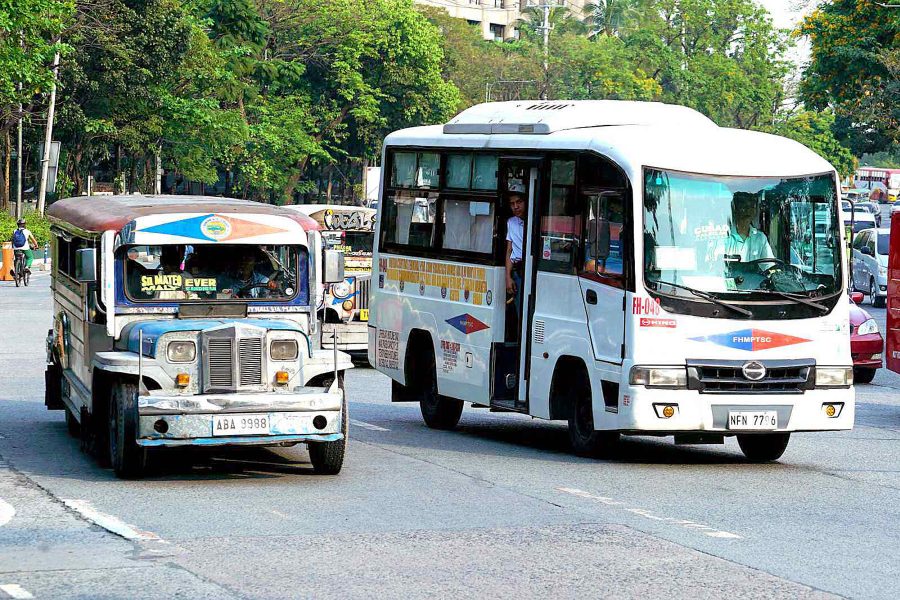
That last row is worth taking seriously. A lot of daily trips are better done on the LRT and MRT, the EDSA Carousel or a jeepney, with a short ride on either end.
What am I paying for when I book a Grab?
A ride-hailing car is a transport network vehicle service, or TNVS, and its fare is built from parts the Land Transportation Franchising and Regulatory Board (LTFRB) regulates: a base fare, a charge per kilometre and per minute, and a pick-up fare for the driver’s trip to reach you. On top of that, the app’s price rises when demand outruns the cars on the road, which is why the same trip can cost noticeably more at six in the evening or in a downpour.
Two dated details. As of November 2026, according to the LTFRB decision reported by Top Gear Philippines, the TNVS base fare is ₱65 for a sedan and ₱55 for a hatchback, with the per-kilometre and per-minute rates unchanged. That increase was approved in March 2026 but suspended on the day it was due to start. It took effect on 28 September 2026, when the DOTr lifted the suspension, The Philippine Star reported. And under the LTFRB’s Memorandum Circular 2026-059, issued in July 2026, apps may only match you with drivers within five kilometres. The pick-up fare, ₱26 per kilometre for a sedan, has to appear as a separate line before you confirm and goes entirely to the driver, Top Gear and the Daily Tribune reported. The practical lesson stays the same whatever the figures: compare the quote across apps, and if it looks inflated, wait 20 minutes or walk to a busier road.
Grab is not the only app. JoyRide and Angkas also run car services, and both took part in the ride-hailing hub NNIC opened at NAIA Terminal 3 in December 2024. Our NAIA arrival guide covers the airport end. Whichever you use, it needs mobile data and, ideally, a cashless wallet, which our money and SIM guide explains.
Is a street taxi still worth flagging down?
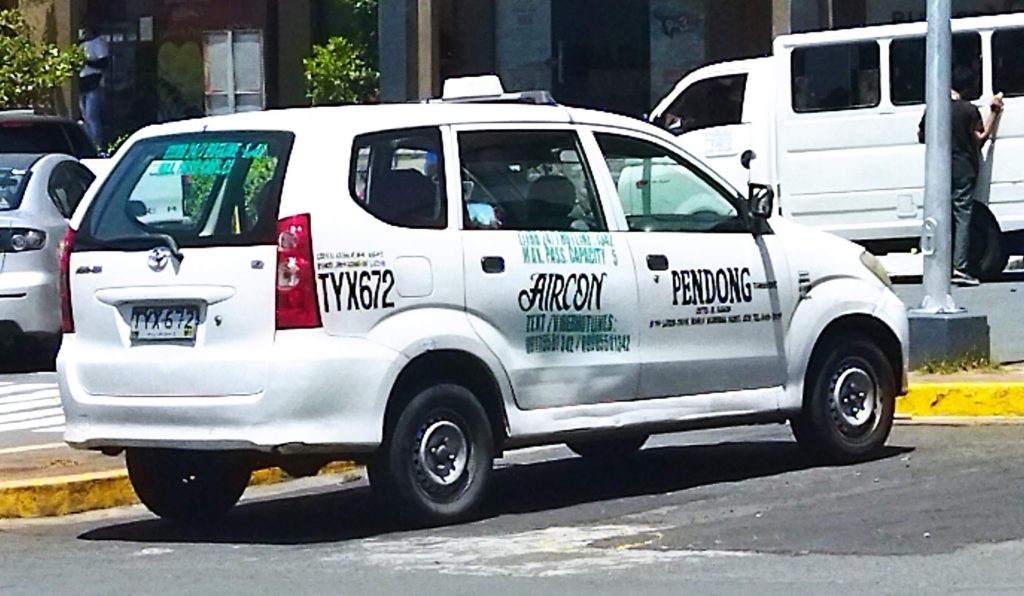
Yes, on the right trip. A white metered taxi needs no app, and for a short ride in light traffic the meter can come in under an app quote. The regular taxi flag-down rose from ₱45 to ₱50 under a March 2024 LTFRB decision, and regular taxis were left out of the March 2026 increases. Taxi operators have petitioned for a higher flag-down and per-kilometre rate, which the LTFRB set for hearing in August 2026, the Daily Tribune reported, and Context.ph said in late September that the taxi petitions were still under review. As of November 2026 we had not found a decision, so check the fare matrix posted in the cab.
The thing to watch for is the kontrata, a driver naming a flat price instead of turning on the meter. You can decline and wait for the next cab. If a driver refuses you or overcharges you, note the plate and body number and report it to the LTFRB’s 24-hour hotline, 1342. The UK government’s travel advice also tells visitors to use only taxis from reputable companies. Our reading of that: a cab from a mall or hotel taxi bay, or one you flag down yourself, is a better bet than a car whose driver comes looking for you.
Are motorcycle taxis legal now?
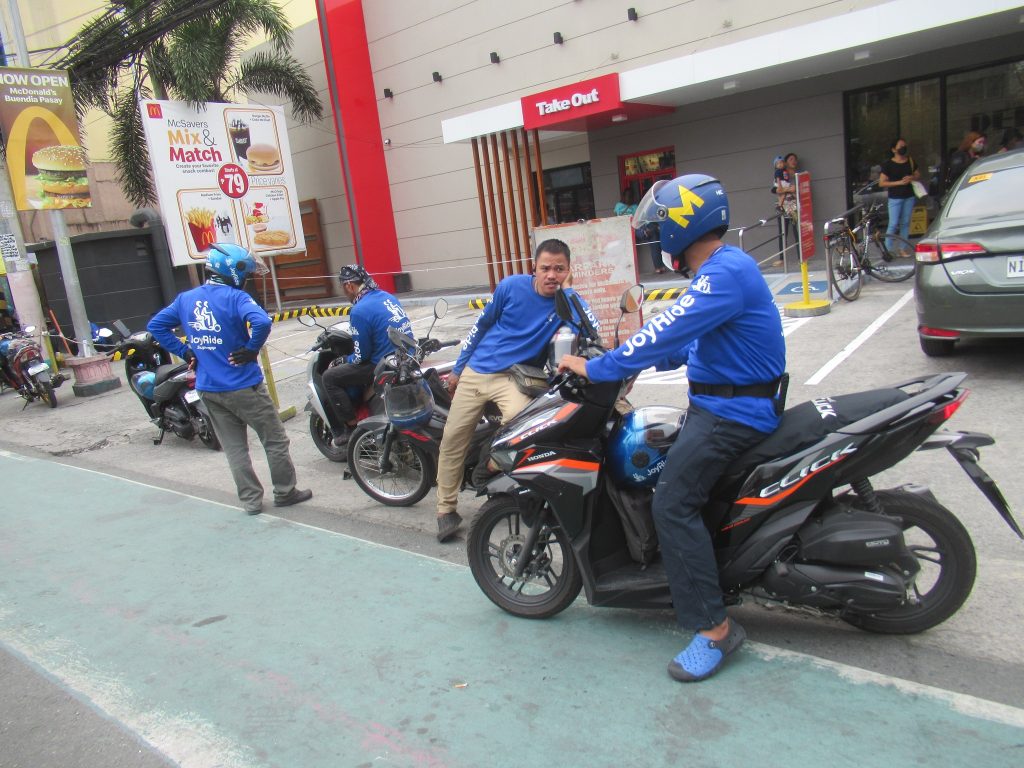
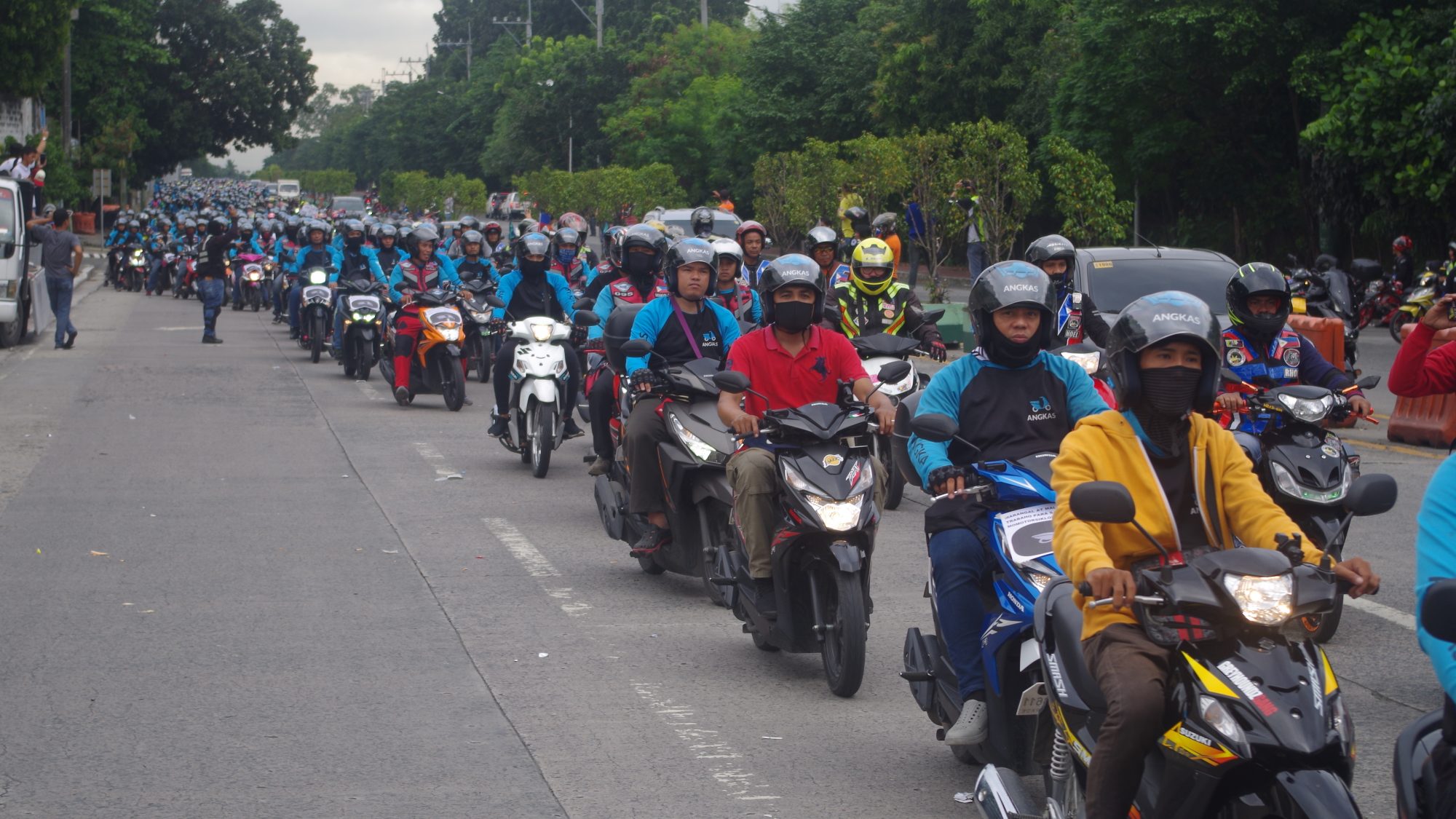
Partly, and the answer depends on what you mean by legal. There is still no law passed by Congress that makes motorcycles a recognised kind of public transport; bills to that effect were still pending in the House as of November 2026. For years, app-based motorcycle taxis ran under a government pilot study. In 2026 the Department of Transportation (DOTr) replaced that with interim rules in Department Order No. 2026-006, which a CLTV36 report described as recognising motorcycle taxis as public utility vehicles while Congress decides. The LTFRB set out the detailed rules in Memorandum Circular 2026-048 and opened accreditation for platforms on 5 August 2026. According to MotoPinas and Manila Bulletin, the circular requires riders to hold a provisional authority and bars them from working for more than one platform. We could not read the order or the circular themselves; the LTFRB’s website blocked our requests.
Accreditation is not automatic. In October 2026 the LTFRB turned down GrabBike and Dingdong RiderKo, ruling that they had not kept up their part in the pilot study, GMA News reported. The established platforms are Angkas, JoyRide and Move It; Grab bought Move It in 2022, and its own site points riders there for motorcycle trips. The number of riders each may field is capped. By early November 2026 the LTFRB had fined Move It about ₱555.7 million for going over its allocation, which the company is contesting, and the DOTr said the cap itself needed review, according to The Philippine Star. Expect more changes. For your purposes, book through a platform the LTFRB currently recognises, and check its announcements if a new app appears.
How do I ride one without regretting it?
Book in the app rather than hailing a rider off the street. A street pick-up leaves no record of the rider, the plate or the route, and it sits outside the accreditation system the LTFRB is building. The Motorcycle Helmet Act of 2009 (Republic Act 10054) requires back riders, not just drivers, to wear a standard protective helmet. So don’t get on without one, and fasten the strap.
The rest is common sense that people skip when they are late. Keep your bag in front of you, not hanging off one shoulder. Skip the motorcycle when it is pouring, when the roads are flooded or when you are carrying something you cannot hold with one hand; our rainy-season guide explains how to read the weather warnings. If the rider is speeding or weaving in a way that frightens you, say so. You can ask to be let off, and you can rate and report the trip afterwards.
What does the app do if something goes wrong in a car?
Grab says its app has an emergency SOS button that connects you to law enforcement, a “Report an Issue” function, and trip monitoring that flags unexpected stops or detours. In September 2024 it added random driver selfie checks and Audio Protect, an opt-in recording of the ride. Its Share My Ride feature sends a live map of your trip to someone you trust. Turn it on for every trip, before anything feels wrong. Before you get in, check that the plate and the driver’s face match the app. If they don’t, cancel, whatever the driver tells you. For broader advice on getting around the metro, see our Metro Manila safety tips.
Last checked in November 2026. The motorcycle-taxi rules in particular were still being worked out, so check the LTFRB’s and DOTr’s latest announcements, and your app’s fare screen, before relying on any figure here.
Sources
- Top Gear Philippines, “LTFRB approves fare adjustments for PUVs“, 17 March 2026
- The Philippine Star, “DOTr lifts suspension of PUV fare hike“, 26 September 2026; Context.ph, “Lopez lifts PUV fare adjustment freeze; new rates start September 28“, 25 September 2026
- Top Gear Philippines, “LTFRB revives pick-up fare for TNVS“, 21 July 2026; Daily Tribune, “LTFRB rules set fixed TNVS pick-up rates“, 19 July 2026
- GMA News, “LTFRB OKs fare hikes across almost all public utility vehicles“, 17 March 2026
- Daily Tribune, “LTFRB to hear competing fare hike petitions on Monday“, 1 August 2026
- GMA News, “LTFRB sets Aug. 5 opening of motorcycle taxi platform provider accreditation” and “LTFRB rejects GrabBike, Dingdong RiderKo accreditation bids“, 2026
- CLTV36, “Motorcycle taxis, pasok na sa PUV classification“, 2026; MotoPinas, “Motorcycle rider group urges LTFRB to suspend new motorcycle taxi rules“, 9 July 2026; Manila Bulletin, “Motorcycle taxi group backs LTFRB’s prohibition of multi-homing“, 6 August 2026
- The Philippine Star, “Dizon eyes rider cap review“, 5 November 2026; Politiko, “Motorcycle taxi rules must consider commuter welfare, riders’ job security“, November 2026
- Republic Act No. 10054, Motorcycle Helmet Act of 2009
- Grab Philippines, transport services and “Grab accelerates launch of new safety measures“, September 2024
- UK Foreign, Commonwealth & Development Office, Philippines travel advice: safety and security