
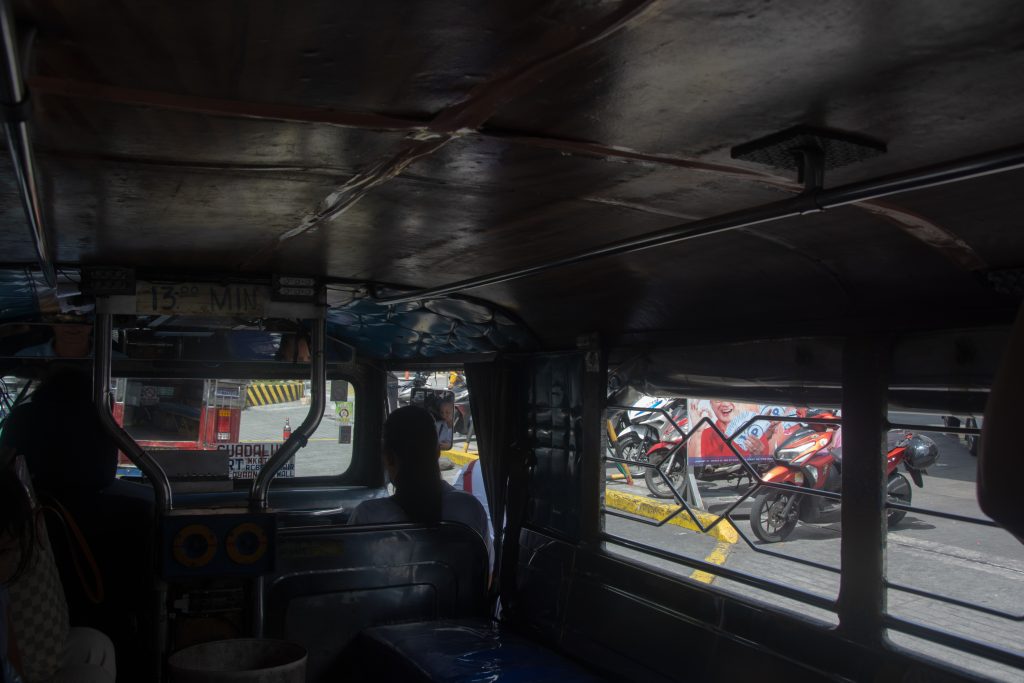
A traditional jeepney seats up to eighteen people, two of them beside the driver and the rest on two long benches behind him, facing each other. With his eyes on the road, he can’t watch who climbs in at the back, yet their fares reach him. Passengers pass the coins forward along the bench, hand to hand, with two words: bayad po, “here’s my fare”. In an essay on jeepney life published by the Asia News Network, the writer sums it up: “The driver doesn’t see every passenger, and yet the system holds.”
A first-time visitor to Manila can learn the routine in one short ride without holding up the whole bench. The ride itself goes the same way on almost every route, so the steps below should stay useful for years. Fares do change. In 2026 they were approved, frozen and revived within six months, so every figure here is dated and sourced.
Step 1: Know which kind of jeep is pulling up
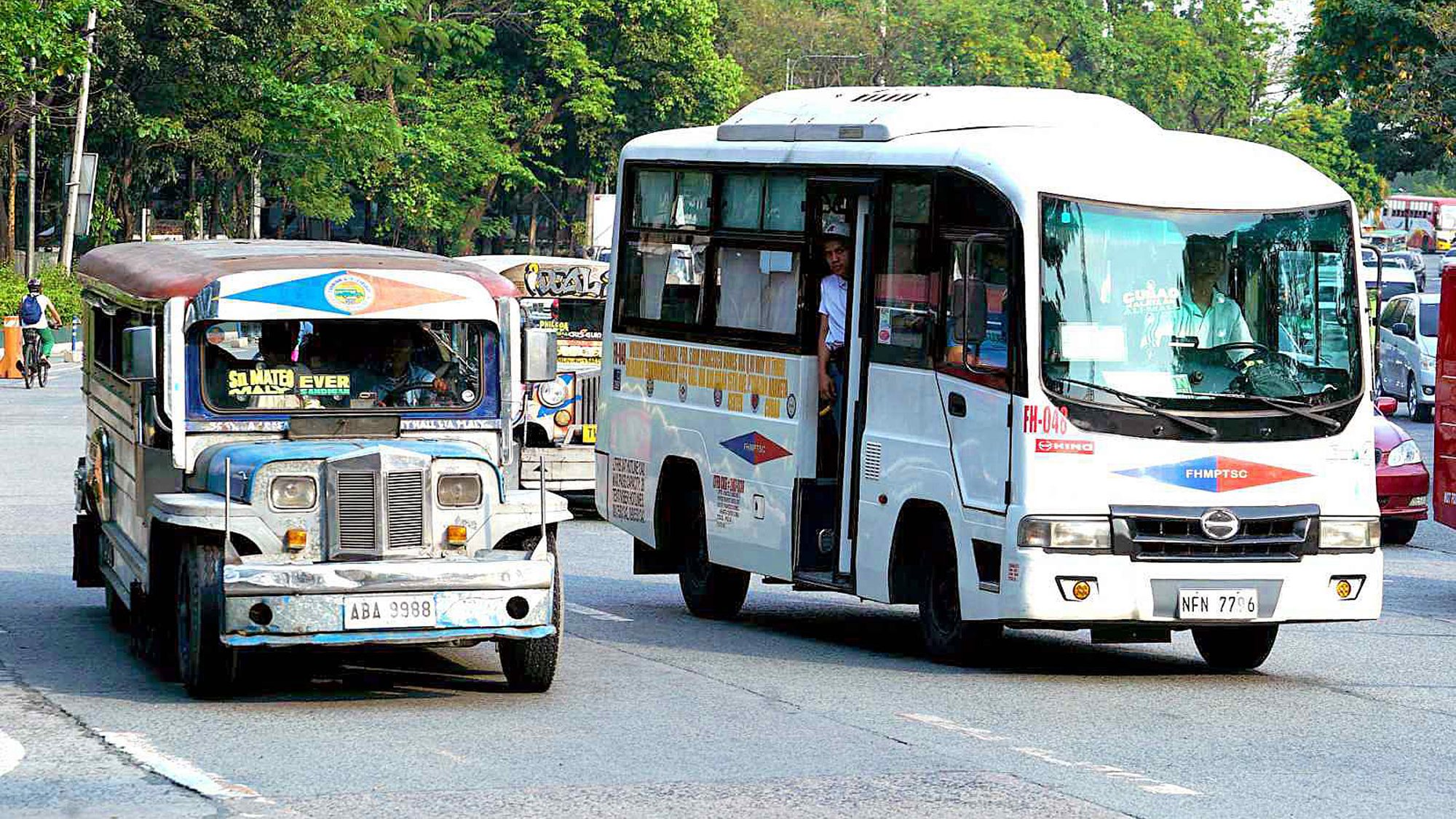
Two kinds share the road. The traditional jeepney is the chrome-and-paint descendant of the US Army jeeps left behind after the Second World War. Filipino owners stretched them, roofed them over and fitted bench seats. The name joins “jeep” and “jitney”, the American slang for a cheap shared ride. You climb in at the back.
The modern jeepney is the product of a government programme the Department of Transportation (DOTr) started in 2017. Replacement vehicles must have at least a Euro 4 engine or an electric motor, and operators have been pushed into cooperatives and consolidated franchises. Many modern units look more like small buses than jeeps. Drivers’ groups such as PISTON and Manibela have opposed the programme over debts and lost livelihoods, and others mourn the old look. Both kinds run on the same streets, and a modern unit costs a few pesos more to ride.
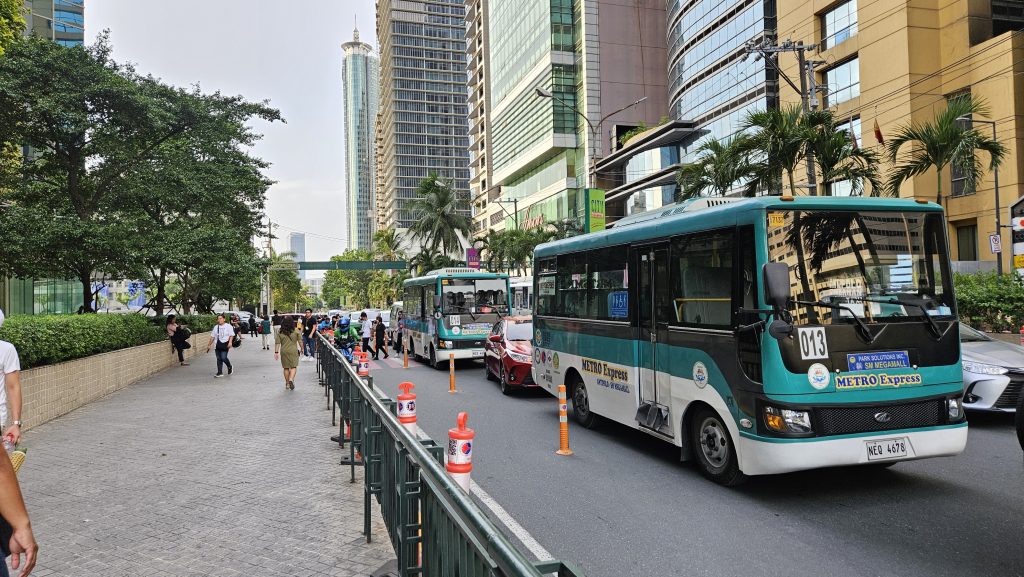
Don’t expect the traditional jeep to disappear before your trip. The deadline for operators to consolidate was pushed back from December 2023 to April 2024, and traditional units still run. In April 2026, a Manila Bulletin headline quoted Malacañang as saying that immediate implementation of jeepney modernisation was not being discussed.
Step 2: Read the side of the jeep, then ask anyway
A jeepney follows a fixed, franchised route. Under a 2004 Metro Manila Development Authority (MMDA) regulation, that route has to be painted on both sides of a jeepney’s body, between the window line and the skirt, in letters four inches high. The same regulation limits drivers to one signboard in the windshield, because, it says, more than one board encourages trip-cutting. So the side panel tells you what the jeep is licensed to do. A board at the front, if there is one, may tell you only where this particular trip is going.
Neither tells you whether it passes the street you need. The quickest check is to ask the driver or the person nearest the door before you climb in. Name your destination and add po, the Tagalog marker of politeness: “Quiapo po?” Regular riders learn the routes by repetition, as the ANN essay notes. A visitor has to ask, and it costs less than a wrong turn to Pasay.
Step 3: Get on and make room
Raise a hand to flag one down, as you would a taxi. On a traditional jeep you board at the rear and stoop your way to a gap on the bench. The polite thing is to move further in, towards the driver, so the next passenger isn’t left perched at the entrance. Expect a tight fit. The ANN essay describes the bench as “whoever happens to be there”, and nobody gets a seat of their own. Bags go on your lap, not on the seat beside you.
Step 4: Pay, and pass
Have coins or small notes ready before you get on. A ₱1,000 note handed down a bench of strangers is a problem for everyone, the driver included. Once you’re seated, hold out your fare to the person next to you and say “bayad po“. Add your destination and how many people you’re paying for: “Bayad po, two, Quiapo.” The money travels forward, and your change comes back the same way.
Two things follow from that system. First, when someone further back says “bayad po” and holds out coins to you, take them and pass them on. You’re part of the chain now, and the whole system depends on it. Second, make sure your payment registers. A Rappler writer who catalogued the passengers you meet on a Manila jeep advises calling out “Bayad po!” and keeping your arm out until you’ve made eye contact with the driver, so he remembers you’ve paid and nobody can quietly claim your coins.
What it costs. As of November 2026, according to the DOTr and the Land Transportation Franchising and Regulatory Board (LTFRB) as reported by Philstar and Context.ph, the minimum fare on a traditional jeepney is ₱14, which Context.ph says covers the first four kilometres. Each kilometre after that adds ₱2. On a modern jeepney the minimum is ₱17, and each extra kilometre adds ₱2.40 according to GMA News and Context.ph, though the schedule Philstar Life published in March gave ₱2.30. These rates have a short, odd history. The LTFRB approved them in March 2026 because fuel prices had jumped during the Middle East conflict. President Marcos suspended them on 19 March, the day they were due to start. The DOTr lifted the suspension in late September, and the new fares took effect on 28 September 2026.
Students, senior citizens and persons with disabilities pay 20 per cent less, and the DOTr confirmed in September that the discount stays. Say which discount you’re claiming when you pay, and have the ID that proves it ready in case the driver asks. Drivers are supposed to display the fare guide. The LTFRB said in September that drivers could collect the new fare before posting the matrix, and that they could print the guide from its website. If you think you’ve been overcharged, the LTFRB’s hotline is 1342.
Bring cash. Card and QR payments have been piloted on some modern units, but we found no Metro Manila-wide cashless system for jeepneys as of November 2026. Our money and connectivity guide covers cash, e-wallets and ATMs.
Step 5: Say “para po” before your stop, not at it
Para po means “please stop”. Say it clearly, loud enough to carry over the engine, a little before your corner, so the driver has time to pull in. If you’re shy about shouting, tell the people next to you where you’re getting off and ask them to call it for you. Step down carefully. On a traditional jeep you leave by the back, so check for motorcycles and cars before your foot reaches the road.
Step 6: Keep your phone in your hand or your bag
Crowded benches make it easy for thieves to work unseen, and police have said so. In May 2026 Manila Bulletin reported that Taguig police were warning of a “sauce” distraction trick on jeepneys. In October Interaksyon ran a commuter’s video of a suspected theft on a night jeep in Bacoor, Cavite, with the usual advice to keep belongings secure and stay aware of who is around you. In practice, that means holding your bag on your lap with the zip towards you, not leaving a phone on the seat, and keeping a hand on your things if a stranger causes a sudden fuss beside you. This is the ordinary care you’d take on any crowded transport, not a reason to avoid jeeps. Our Metro Manila safety guide covers the reported scams and emergency numbers in more detail.
When a jeep isn’t the right ride
Jeepneys are at their best over a few kilometres on a known route: from an LRT station to a market, across a district, to a church on the next barangay over. For long runs across the metro they lose time at every corner. On EDSA, the EDSA Carousel runs in its own lane, and the trains are covered in our rail and Beep card guide. A jeepney is also a poor choice if you’re hauling a suitcase, or if you’re travelling late at night on an unfamiliar route. Our Grab, taxi and motorcycle taxi guide covers those trips. For a first ride with a clear goal, take LRT-1 to Carriedo and follow our Binondo walking guide. Walk the route, then try a short jeepney hop on the way back, when you know where you’re going.
Fares and franchise rules here were checked in November 2026. The LTFRB revises them when fuel prices move, so check its latest fare guide, or the matrix inside the jeep, before you rely on the peso figures above.
Sources
- Philstar, “DOTr lifts suspension of PUV fare hike“, 26 September 2026
- Context.ph, “Lopez lifts PUV fare adjustment freeze; new rates start September 28“, 25 September 2026
- GMA News, “LTFRB OKs fare hikes across almost all public utility vehicles“, 17 March 2026
- Philstar Life, “Attention, commuters: Here are the updated fares for airport taxis, TNVS, other PUVs“, March 2026
- Philstar, “Marcos suspends fare hike“, 19 March 2026
- Daily Tribune, “LTFRB: Drivers may collect fare hike without physical matrix“, 27 September 2026
- Metropolitan Manila Development Authority, Regulation No. 04-001 (fixed signboards on public utility vehicles), 2004
- Asia News Network, “Philippine jeepneys as a social space“
- Rappler, “The 15 passengers you’ll meet on a Philippine jeepney“
- Manila Bulletin, “Taguig police warn of ‘sauce’ distraction modus on jeepneys“, 7 May 2026; “Immediate implementation of jeepney modernization not being discussed, Palace says“, 17 April 2026
- Interaksyon, “Commuter calls attention to suspected theft inside Cavite jeepney“, 22 October 2026
- Wikipedia, Jeepney and Public Utility Vehicle Modernization Program