
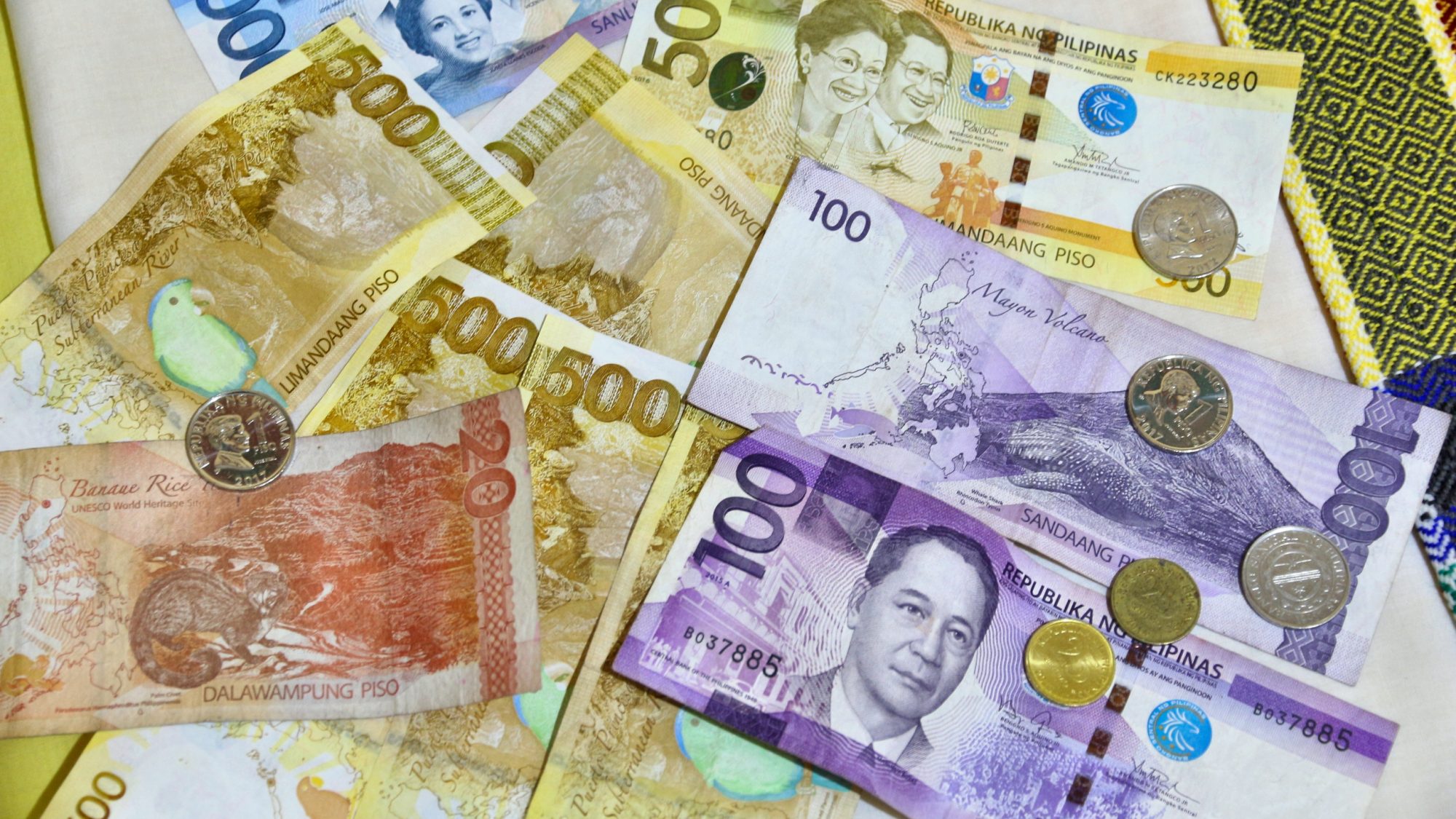
Add up the basic salary you were actually paid from January to December, divide it by twelve, and you have the smallest 13th-month pay your employer can legally give you. Someone whose basic pay came to ₱228,010.04 over the year is owed at least ₱19,000.84. That figure is one of the examples the Department of Labor and Employment gave with its 2026 guidelines, as reported by GMA News and People Matters, and the deadline is the same as it has been since 1975: on or before 24 December.
The arithmetic is the easy part. The harder questions are about the word “basic”, about who counts as rank-and-file, and about people who left the company in June. This explainer works through them using the law itself: Presidential Decree No. 851, its implementing rules, the 1987 Revised Guidelines, whose wording DOLE’s yearly advisories still follow, and what has been reported about this year’s advisory. It is general information, not legal advice for your situation.
Where the law came from
Ferdinand Marcos signed PD 851 on 16 December 1975, with a 24 December deadline written into it. (For that first year, supplementary rules pushed compliance back to 31 March 1976, citing employers’ cash flow over the long holiday.) Its preamble is blunt about the reasons: real wages needed protecting “from the ravage of worldwide inflation”, and “there has been no increase in the legal minimum wage rates since 1970”. The third reason was seasonal. Christmas, the decree said, was “an opportune time for society to show its concern for the plight of the working masses so they may properly celebrate Christmas and New Year.”
As first written, it only covered employees earning no more than ₱1,000 a month. That ceiling went in 1986, when President Corazon Aquino’s Memorandum Order No. 28 rewrote the rule to cover “all their rank-and-file employees”. The 1987 Revised Guidelines spell out the consequence: rank-and-file workers are entitled “regardless of the amount of basic salary that they receive in a month”.

Who is entitled
Every rank-and-file employee in the private sector, “regardless of their position, designation, or employment status, and irrespective of the method by which their wages are paid, provided that they have worked for at least one month during the calendar year.” That sentence, quoted by the Daily Tribune from DOLE’s 2026 advisory (we have not read the advisory’s full text), is almost word for word what the 1987 guidelines say. Employment status does not matter, so probationary and contractual staff are inside it. So is someone who started on 1 November.
“Rank-and-file” is defined by what you are not. The guidelines borrow the Labor Code’s test for a managerial employee: someone with power to lay down and carry out management policy, or to hire, transfer, suspend, lay off, recall, discharge, assign or discipline staff, or to effectively recommend those actions. Anyone who does not fit that description is rank-and-file, whatever their job title says. A “manager” who cannot hire or discipline anyone, or effectively recommend it, is rank-and-file for this law.
The rules name several groups specifically:
- Piece-rate workers are covered, on their total earnings for the year.
- People with more than one employer, full-time or part-time, are owed 13th-month pay by each private employer. That includes government employees who work part time for a private firm or school.
- Private school teachers are covered however many months they teach or are paid, if they served at least one month in the year.
- Kasambahay are covered too. The 1987 guidelines excluded household helpers, but the Batas Kasambahay (Republic Act No. 10361, 2013) settled it: “The domestic worker is entitled to a thirteenth month pay as provided for by law.”
Who is left out? Government workers, including those in government-owned and controlled corporations other than ones run essentially as private subsidiaries; their year-end bonus comes under separate rules not covered here. Managerial employees, as defined above. Employers of people paid purely on commission, boundary or task basis, or a fixed amount for a specific job regardless of time spent. And employers who already pay a 13th month or more, or “its equivalent”.
Does a Christmas bonus count?
It can. Under the guidelines, “its equivalent” includes a Christmas bonus, mid-year bonus, cash bonuses and other payments, provided they add up to at least one-twelfth of basic salary. Cash and stock dividends, cost-of-living allowances, other allowances you regularly receive, and non-monetary benefits do not count. If your employer’s bonus falls short of one-twelfth, the employer must pay the difference. A ham and a gift basket at the Christmas party are pleasant. They are not 13th-month pay.
What “basic salary” leaves out
The 1987 guidelines define basic salary as what you were paid for services rendered, minus allowances and monetary benefits that are not part of the regular salary, “such as the cash equivalent of unused vacation and sick leave credits, overtime, premium, night differential and holiday pay, and cost-of-living allowances.” So a call-centre agent with a large night-differential component should expect a 13th month based on the base rate, not the take-home.
There is an exception that cuts the other way. If an employment contract, a collective bargaining agreement, or company practice or policy treats any of those items as part of basic salary, they go into the computation. Check your contract and your company handbook before deciding you have been shortchanged, or that you have not.
Commissions are the grey area. The 1987 guidelines said employees on a fixed wage plus commission should be paid on both. The examples reported from the 2026 advisory exclude commissions that are not part of basic salary. In practice it depends on what the commission actually is. If yours is large and regular, ask HR in writing how it was treated, or ask DOLE.
Working it out
These are the worked examples DOLE gave for 2026, as quoted by GMA News on 10 November 2026 and reported by People Matters. We could not read the text of the advisory itself, so the figures are as those outlets reported them; we checked the arithmetic, and each figure is one-twelfth of the amount, rounded to the centavo.
| Situation | Earned in the year | Minimum 13th-month pay |
|---|---|---|
| Regular employee | ₱228,010.04 basic salary | ₱19,000.84 |
| Piece-rate worker | ₱120,000 in production earnings | ₱10,000.00 |
| Fixed wage plus commission | ₱235,560.04 fixed wage, plus ₱30,000 commission not counted as basic | ₱19,630.00 |
| Resigned in September | ₱177,236.28 basic salary, January to September | ₱14,769.69 |
Unpaid leave, a mid-year salary increase or a late start are all handled the same way: add what was actually paid as basic salary during the calendar year, then divide by twelve. Twelve equal months of ₱20,000 gives ₱20,000. Six months at ₱18,000 and six at ₱22,000 gives the same.
Left the company? You are still owed
An employee who resigns or is let go before December is entitled to a pro-rated amount: one-twelfth of the basic salary earned from January to the last day of work. The guidelines also say you can ask for it when you leave rather than waiting until December, on the principle that “as the employer can require the employee to clear himself of all liabilities and property accountability, so can the employee demand the payment of all benefits due him”.
When it has to arrive
Not later than 24 December. Employers may split it, paying half before the school year opens and the rest on or before 24 December, and in a unionised workplace the schedule can be agreed with the union. For 2026, DOLE’s Labor Advisory No. 21, signed on 6 November by Labor Secretary Francis Tolentino, keeps the 24 December 2026 deadline, and DOLE said no exemptions or deferments will be granted, according to the Daily Tribune.
Two smaller rules round this out. The 13th month is not counted as part of your regular wage when overtime, premium pay or social-security contributions are computed. And no employer may use the law as a reason to cut a benefit you were already getting.
How much of it is taxed
Under the TRAIN law (Republic Act No. 10963), the 13th month and other benefits, including productivity incentives and Christmas bonuses, are excluded from taxable income up to a combined ₱90,000. Anything above that is taxed with the rest of your compensation. Bills pending in Congress in 2026 would raise the ceiling, to ₱120,000 in one House bill and to ₱150,000 in others. As of 22 November 2026 we found no record of any of them becoming law, so plan on ₱90,000.
If it does not come
Start with a written request to HR or payroll, with your own computation attached. If that goes nowhere, non-payment is treated as a money claim under the Labor Code, and DOLE said this year that compliance will be monitored by its regional, field and provincial offices; take your payslips and contract to the office that covers your workplace. Employers also have to report compliance to DOLE. Last year’s advisory set 15 January 2026 as the deadline for filing those reports online; we have not confirmed the 2027 date.
Once the money is in hand, it tends to go quickly, and some of it in Divisoria. Our Divisoria Christmas shopping guide covers when to go and when to stay away.
Sources
- Presidential Decree No. 851 (1975) and its implementing rules, via the Lawphil Project
- Memorandum Order No. 28 (13 August 1986), via the Lawphil Project
- Revised Guidelines on the Implementation of the 13th Month Pay Law (1987), via ChanRobles Virtual Law Library
- Republic Act No. 10361 (Batas Kasambahay) and Republic Act No. 10963 (TRAIN), via the Lawphil Project
- Daily Tribune, “DoLE issues 13th-month pay rules“, 10 November 2026, and “DOLE reminds employers of deadline for 13th month pay“, 9 November 2026
- GMA News, “DOLE to employers: Release 13th month pay by Christmas Eve 2026“, 10 November 2026
- People Matters, “Philippines orders 13th-month pay by Dec 24“, November 2026
- SunStar, “DOLE: Submit 13th month pay compliance report by January 15“, 2025; Daily Tribune, “Solon pushes 13th-month pay tax-exempt ceiling raise“, 11 February 2026