
When the Battle of Manila ended in March 1945, San Agustin was the only one of the walled city’s churches still standing. Most of Intramuros had been flattened, and a good share of what you walk past today was put back after the war, much of it since the Intramuros Administration was created in 1979. So this Intramuros walking guide is sorted by what you are actually looking at: what survived, what was rebuilt, and what is a replica.
Fees and hours are in the visiting section at the end, as listed on the Intramuros Administration’s website on 21 November 2026.
Survived: San Agustin
Our pick, if you only have time for one building. San Agustin was declared complete in 1607, which makes it the oldest stone church still standing in the Philippines. In 1993 UNESCO inscribed it, with Paoay, Santa Maria and Miag-ao, as one of the Baroque Churches of the Philippines.
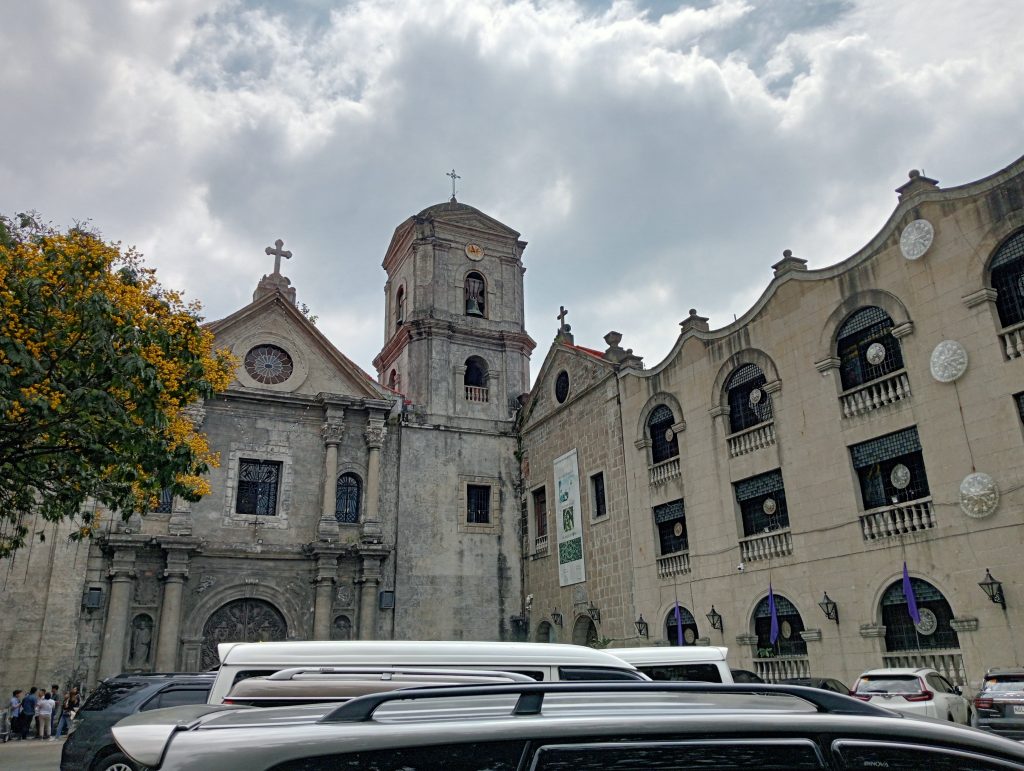
It came through 1945 damaged, not untouched. The church is also often described as the only structure in Intramuros to survive the war, which goes too far: a large part of the walls and parts of Fort Santiago survived as well. What it can claim is to be the only church.
Partly survived: the walls
Miguel López de Legazpi declared Manila the capital of the Spanish colony on 24 June 1571, on the site of Rajah Sulayman’s settlement at the mouth of the Pasig. The first defences were wood and earth. After the Chinese corsair Limahong attacked in 1574, the Spanish turned to stone, and from around 1590 the walls went up in stages over the following centuries.
They are neither original all the way round nor complete. American engineers took out a stretch along the river, from the Santo Domingo gate to the Almacenes gate, in 1903 to improve the wharves and filled the moat, which became a golf course. The bombardment of 1945 destroyed a large part of what was left. Much of what looks old has been reconstructed by the Intramuros Administration, set up under Presidential Decree 1616 to restore the district to its Spanish-era character. The walkway along the top was not continuous at last report, and completing it has been described as one of the Administration’s future plans.
Old fort, new gate: Fort Santiago
Fort Santiago guarded the river mouth for the Spanish and later served the British, the Americans and the Japanese. Under Japanese occupation the Kempeitai jailed and tortured prisoners here, and hundreds died in its dungeons in 1945. The carved main gate you enter by is a 1982 rebuild: the original was destroyed in the war, and according to the Intramuros Administration only the two stone sentries on either side of it are original.
José Rizal was imprisoned here for 56 days, from 3 November to 29 December 1896, before his execution on 30 December. He was held in a cell in the soldiers’ barracks, not in the dungeons. That wing was reconstructed in 1953 and is now the Museo ni Rizal, run by the National Historical Commission of the Philippines.
The dungeons have their own legend, that the tide was let in to drown the prisoners. The Intramuros Administration, citing archaeological evidence, says the chambers sit well above the river and that the story is false.
Rebuilt: Manila Cathedral, 1958
The cathedral’s parish dates from 1571, but the building on Plaza Roma was completed in 1958 and is generally counted as the eighth on the site. Its predecessors were lost to fire, earthquakes and, last, the 1945 battle. On the same square is the Palacio del Gobernador, where the Intramuros Administration has its offices.
The same story applies a short walk away on Arzobispo Street. The Jesuit church of San Ignacio was destroyed in 1945; the Intramuros Administration bought the ruins in 1981 and laid cornerstones for a reconstruction in 2013. The rebuilt complex now holds the Centro de Turismo Intramuros, whose ground floor is free and a sensible place to get your bearings, and the Museo de Intramuros, a museum of religious art.
Replica: Casa Manila
Casa Manila, in the Plaza San Luis Complex at General Luna and Real streets, is a 1980s reconstruction, not a preserved Spanish-era house. According to the Intramuros Administration, its facade was patterned after an 1850s house that once stood on Calle Jaboneros in Binondo, the district across the river covered in our Binondo walking guide. PhilSTAR L!fe reported that the Administration closed it for renovation from 9 October 2026, with no reopening date announced, so look for a notice from the Intramuros Administration before you plan to go inside.
Excavated: Baluarte de San Diego
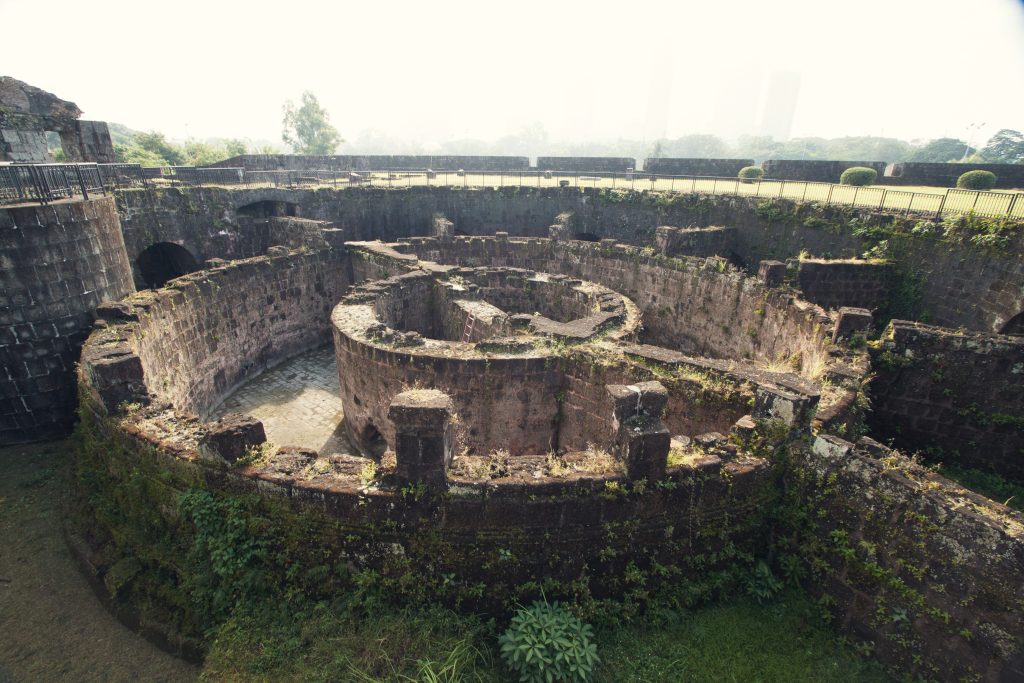
This stop had to be dug out of the ground. Inside the bastion are the stone rings of the Fort of Nuestra Señora de Guía, built in 1586 to 1587 and described by the Intramuros Administration as the first stone fort in Manila. According to the Administration, its upper part was taken down after it cracked, and the rest was absorbed into the ace-of-spades-shaped Baluarte de San Diego, completed between 1653 and 1663. The British breached it in 1762. It was excavated from 1979, restored by 1992, and now has gardens that are rented out for events.
Visiting
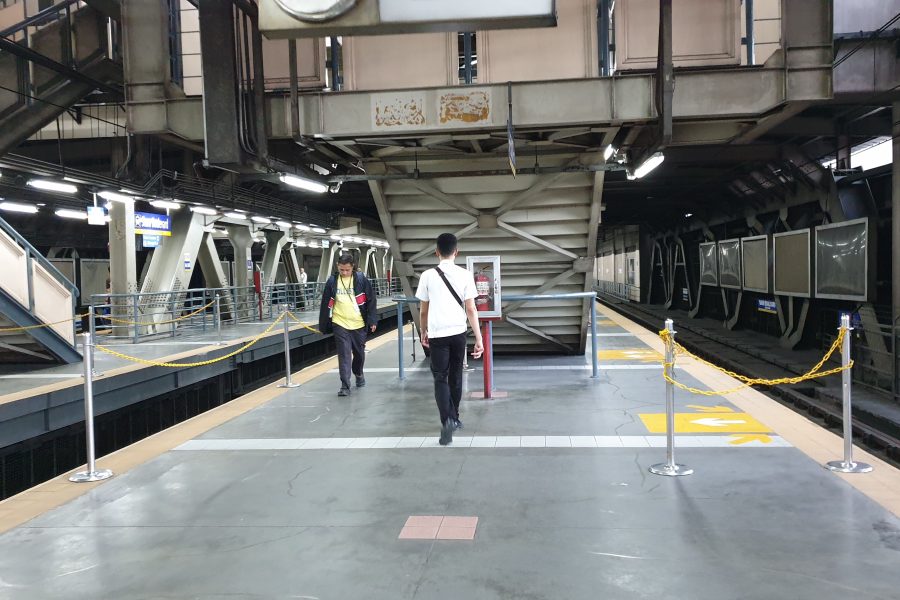
From LRT-1 Central Terminal you can reach Intramuros on foot or along the river. Since the Pasig River Esplanade’s third phase opened on 27 February 2025, its 305-metre Fort Santiago Riverwalk has let visitors enter the fort through the river gate as well as the main gate on Santa Clara Street, and the fourth phase, opened in October 2025, links the riverside to Arroceros, near Central Terminal. We have not walked or measured the route, so treat it as a suggestion.
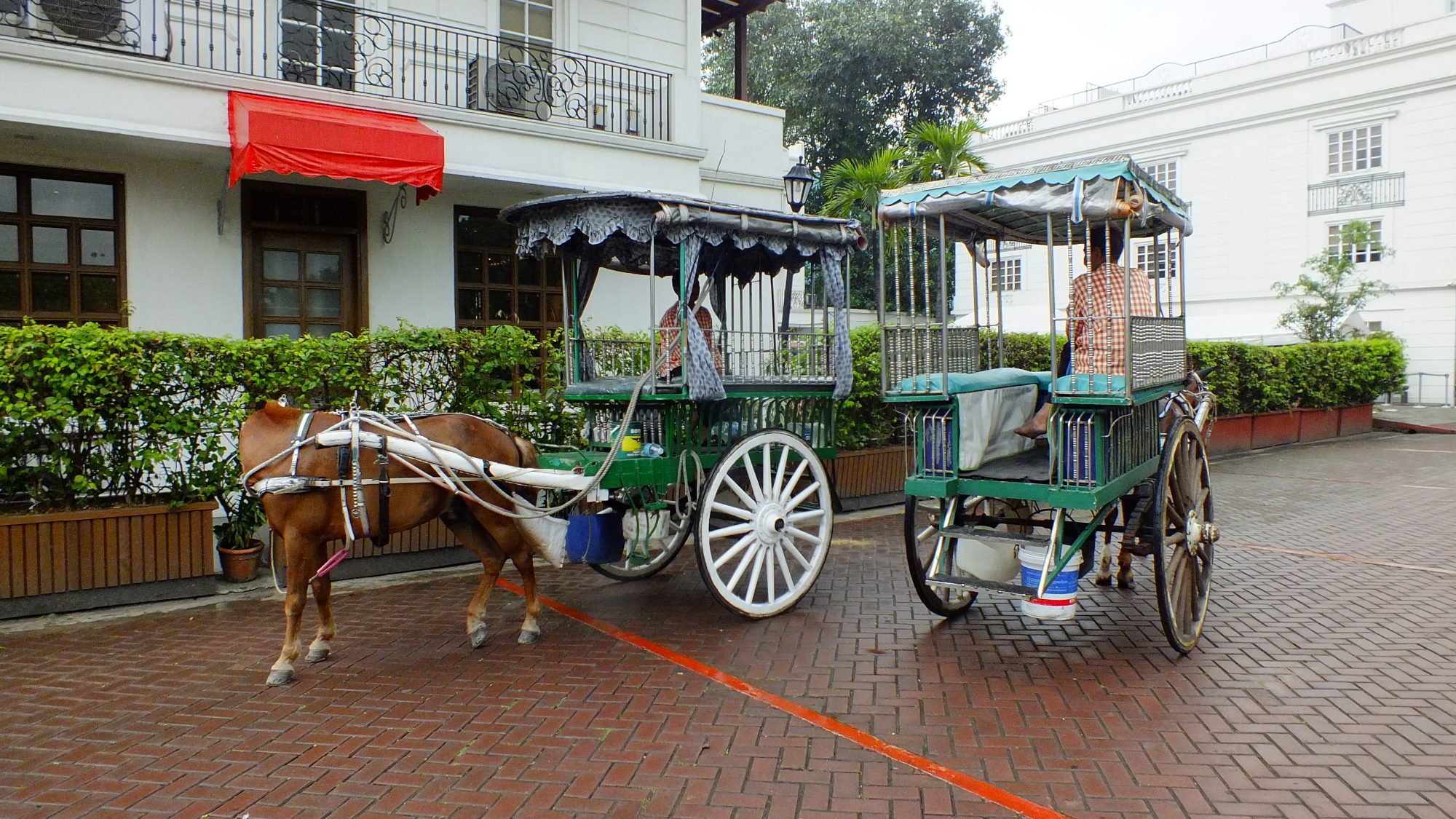
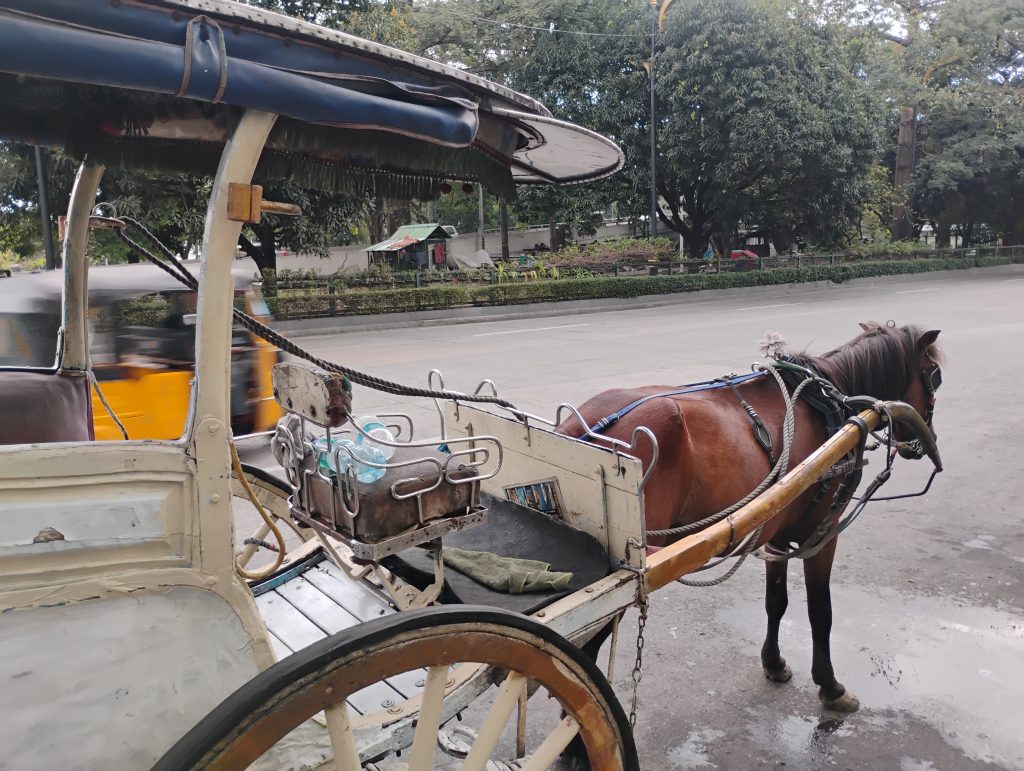
Inside the walls, kalesas wait for passengers; we found no official published fare, so agree a price before you climb in. Bamboo-bike tours also run. For groups, the Intramuros Administration rents out the tranvía, a tram-style vehicle that Intramuros Passport holders can ride free on weekends.
Hours and fees, as listed on 21 November 2026
Fort Santiago: ₱75, or ₱50 for students, seniors and PWDs. Weekdays 8 a.m. to 10 p.m. (last entry 8 p.m.); weekends 6 a.m. to 10 p.m. (last entry 8:30 p.m.). Baluarte de San Diego: daily 8 a.m. to 5 p.m., last entry 4 p.m.; ₱75 or ₱50 according to the Administration’s tranvía page, though its hours page lists no fee. Centro de Turismo Intramuros: ground floor free; Tuesday to Sunday, 9 a.m. to 6 p.m., last entry 5:30 p.m. Museo de Intramuros with the Centro mezzanine: ₱150, or ₱120 discounted, including a guided tour; Tuesday to Sunday, 9 a.m. to 6 p.m., last entry 4:30 p.m. Intramuros Passport: ₱350. Casa Manila: reported closed for renovation from 9 October 2026. San Agustin’s museum and the cathedral: no current official fees published that we could find.
Sites close for bad weather and state events; on 9 August 2026, for example, Fort Santiago and Baluarte de San Diego were shut for the habagat. Check the Intramuros Administration’s website or social pages on the day.
Sources
- Intramuros Administration, Intramuros Sites – Hours and Fees (accessed 21 November 2026), and its Fort Santiago, Dungeons, Museo ni Rizal, Baluarte de San Diego, Casa Manila, Museo de Intramuros, Tranvía and Intramuros Passport pages
- Intramuros Administration, “Intramuros relaunches iconic sites“, 24 November 2024, and “New riverwalk at Fort Santiago expected to boost Intramuros tourist arrivals“, 3 March 2025
- PhilSTAR L!fe, “Casa Manila museum closes temporarily starting Oct 9“, 9 October 2026
- GMA News, “Intramuros gates closed, events canceled“, 9 August 2026
- Daily Tribune, “Rediscovering Intramuros: walking back into the heart of old Manila“, January 2026
- Wikipedia, Intramuros, Fort Santiago, San Agustin Church, Manila Cathedral, Casa Manila and Pasig River Esplanade