
Two trekking trails through the Banaue rice terraces were closed to tourists in November 2025, and as of November 2026 we have seen no report that they have reopened. Banaue’s Executive Order No. 71, which took effect on 21 November 2025 after Super Typhoon Uwan (international name Fung-wong), suspended outdoor tourism “until further notice”. It names the Banaue Viewpoint Trail, from the viewpoint to Bocos, and the Pula–Cambulo–Batad trail, one of the walking routes into Batad.
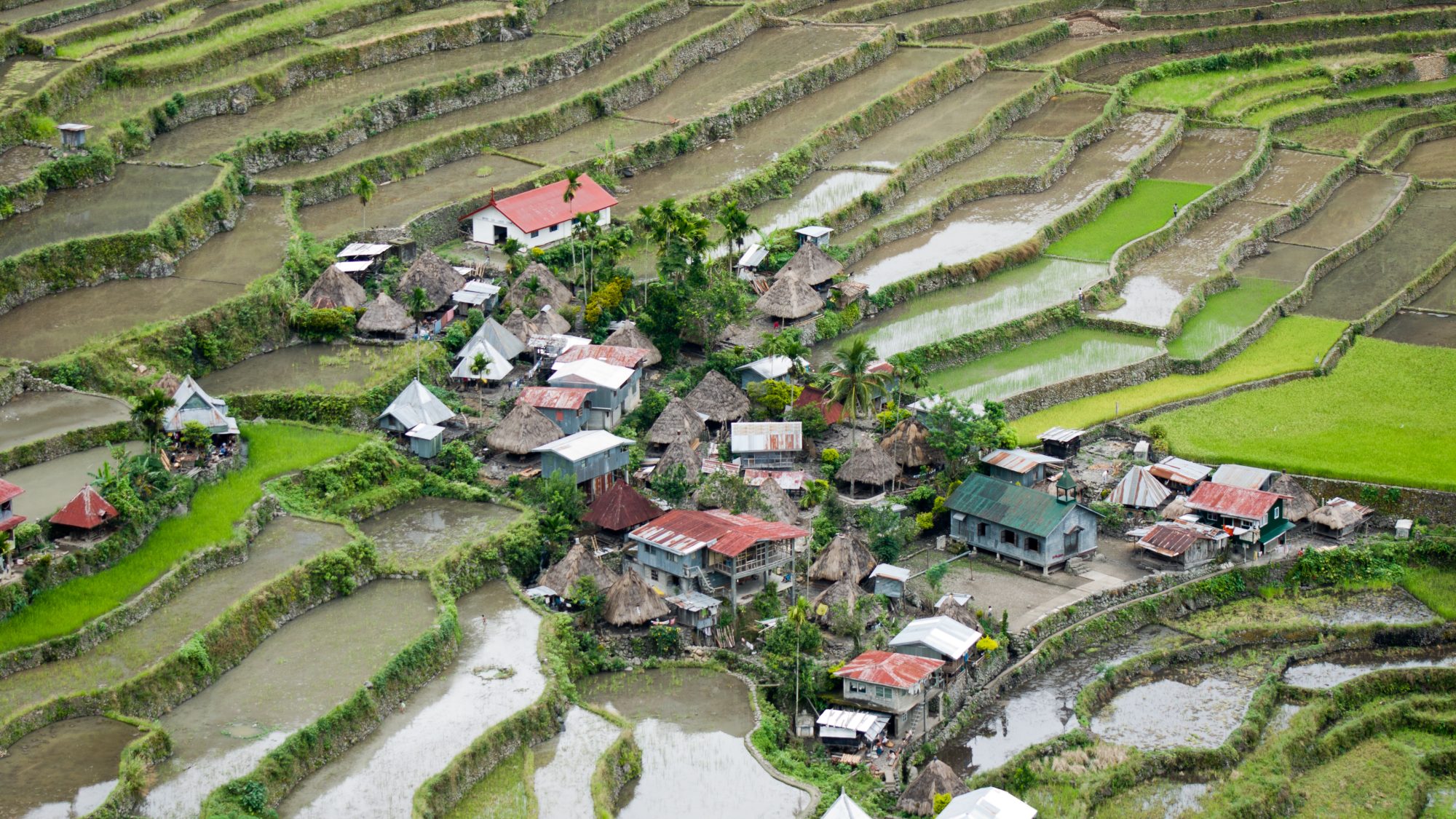
Batad was hit hard by the same typhoon. A landslide there killed two people, destroyed one of the village’s old irrigation canals and damaged more than two hectares of terraces, affecting 150 farmers. According to The Philippine Star, villagers were still rebuilding walls under government work programmes in mid-2026, and in June the province appealed to President Marcos for urgent aid. If you are planning a trip, ask the Banaue Municipal Tourism Office or the Department of Tourism’s Cordillera office (DOT-CAR) what is open before you book anything.
Which terraces are actually UNESCO-listed?
Not the view most people picture. In 1995 UNESCO inscribed the Rice Terraces of the Philippine Cordilleras as five clusters in four Ifugao towns: Batad and Bangaan in Banaue, Hungduan, Mayoyao Central, and Nagacadan in Kiangan. (The 1995 ICOMOS evaluation grouped them as four, by municipality; it is the same property.) The terraces seen from the Banaue town viewpoint were not among the clusters nominated and inscribed. Wikipedia describes them as covered by the 1973 National Cultural Treasure declaration, a point we have not seen confirmed in an official source. Either way, they are not World Heritage.
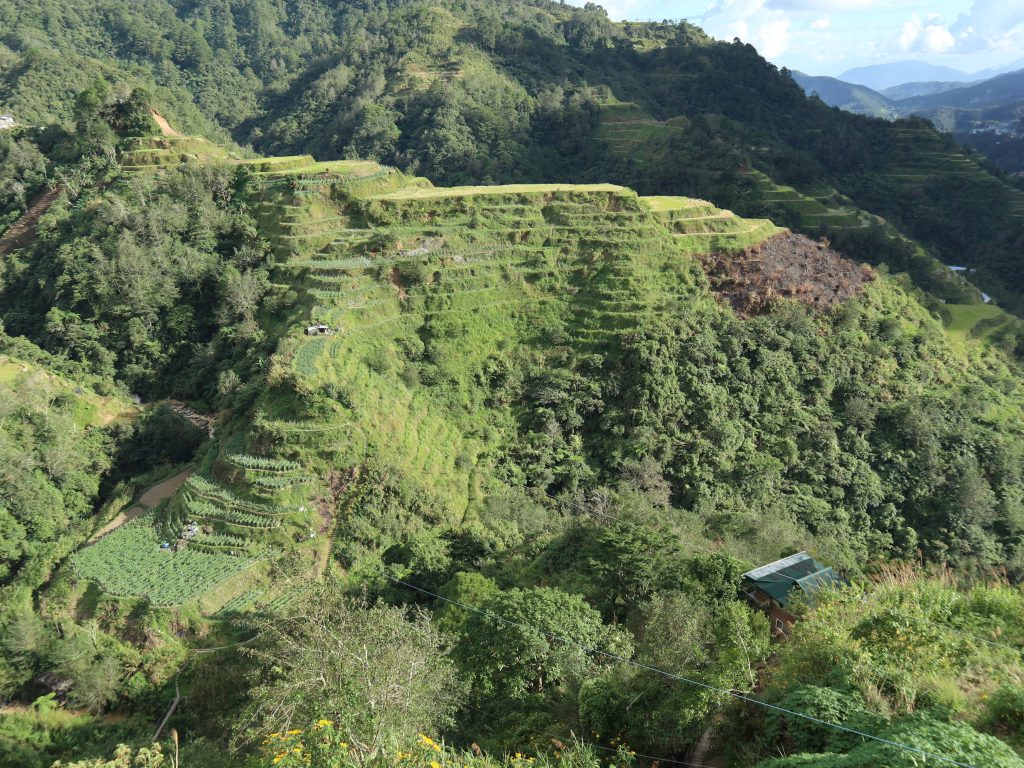
The viewpoint terraces are also changing. The archaeologist Stephen Acabado wrote in Rappler in 2025 that they were shifting from native rice to vegetables, and that his project’s research had documented 21 tinawon rice varieties in the 1970s, of which “only seven remain”.
UNESCO’s own descriptions of the listed clusters are a good guide to what sets each apart. Batad has “amphitheatre-like semi-circular terraces with a village at its base”. Hungduan’s terraces emerge “into a spider web”. Mayoyao’s are “interspersed with traditional farmers’ bale (houses) and alang (granaries)”. Bangaan “backdrops a typical Ifugao traditional village”. Nagacadan has “two distinct ascending rows of terraces bisected by a river”.
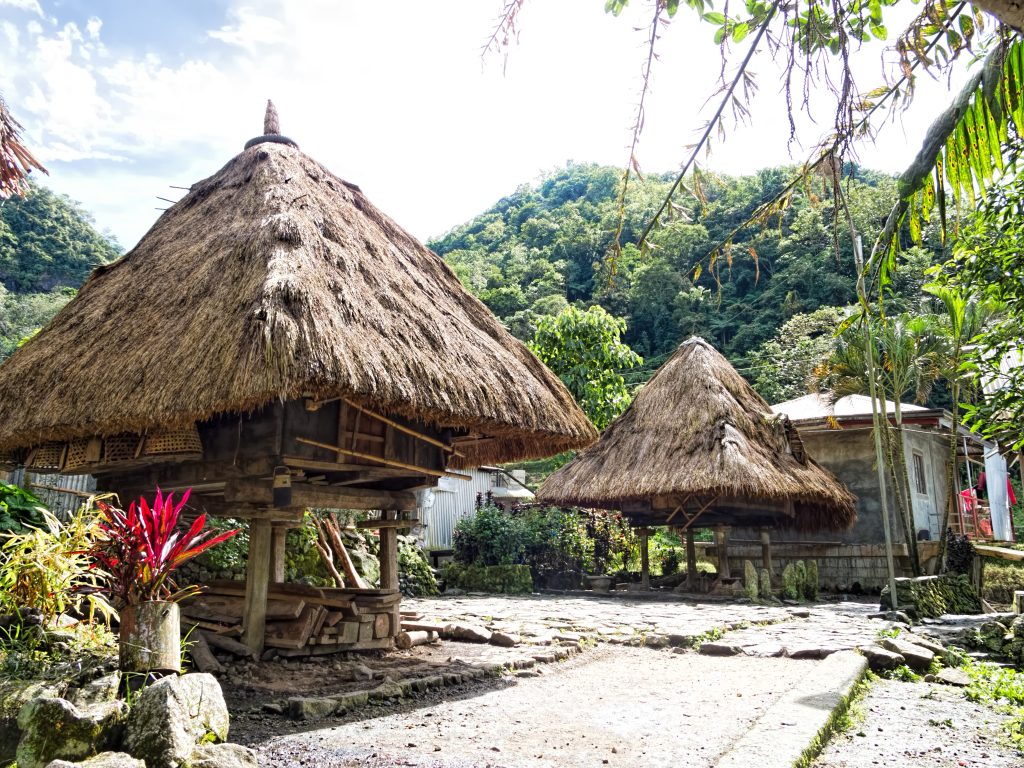
What the listing protects is a working farm system, not a park. “Individual terraces are privately owned and protected through ancestral rights, tribal laws and traditional practices,” UNESCO says. Above them are the muyong, privately owned woodlots that feed water to the paddies and hold the slopes together. From 2001 to 2012 the site was on the List of World Heritage in Danger, which is not the same as being delisted; the Philippines itself sought the danger listing, according to UNESCO, “as a way to raise national and international support”. The threats listed in UNESCO’s conservation reports included “Abandonment of the terraces due to neglected irrigation system and people leaving the area” and “Tourism needs not addressed”.
One more UNESCO label gets mixed up with the terraces. The Ifugao hudhud chants, sung “during the rice sowing season, at harvest time and at funeral wakes and rituals”, are on UNESCO’s Intangible Cultural Heritage list (proclaimed in 2001, inscribed in 2008), not the World Heritage List.
How old are they?
Nobody can give you a settled number, and anyone who does is picking a side. The figure you will see most is 2,000 years, and UNESCO’s page still says the terraces were “Built 2000 years ago”. That number goes back to early-20th-century estimates by H. Otley Beyer and Roy Barton, who worked it out from how long they guessed the terraces would have taken to build, not from direct dating.
The case for a much younger age comes from Acabado and the Ifugao Archaeological Project. Their 2019 paper in the Journal of Field Archaeology argues that “the shift to wet-rice cultivation is a recent phenomenon and a response to the intrusion of the Spanish Empire in the northern highland Philippines.” Rappler reported in 2015 that the team’s findings put the age of the rice terraces at 300 or 400 years. Writing about the excavations at Old Kiyyangan in Kiangan, Archaeology magazine quotes Acabado: “It wasn’t until 1650 that we see a clear, unambiguous appearance of wet rice”. He has also said that earlier terraces likely existed for taro, so the argument is about when rice took over, not about whether anything was there before.
The National Museum’s archaeologists are not convinced. In September 2017 its Archaeology Division issued a statement signed by eight researchers, as reported by Archaeology magazine: “We do not agree that the rice terraces are as young as [he] claims.” Their main objection was that the excavations focused on Kiangan, and the Rappler report had likewise noted that the sites studied did not cover all the clusters. Acabado agreed that research across the whole region is needed. Until it is done, the age of the terraces is an open question, and in our view both “2,000 years” and “only 400 years” claim more than the evidence allows.
How do I get there, and what should I check first?
By public transport from Manila, the trip is an overnight bus. The Ifugao provincial government lists two operators: Ohayami, with a terminal on P. Lacson Avenue corner Fajardo Street in Sampaloc, and Coda Lines, whose Manila departure point is listed differently by different sources, Cubao on the provincial site and Pasay on a 2026 fare listing. As of November 2026 no current official timetable or fare list was online, so book with the operator directly. Driving, the province’s route goes up the North Luzon Expressway and through Nueva Ecija and Nueva Vizcaya to the Bagabag junction, then into Ifugao via Lamut and Lagawe; it estimates seven to eight hours.
Batad is a further step. Traveller guides say there is no road into the village itself: jeepneys and tricycles from Banaue go up to the road end at the “saddle”, and from there you walk down, by their account on steep concrete steps and narrow terrace walls. A traveller review in January 2026 mentioned road works near Batad, so ask in Banaue how far vehicles go now. Before you commit, check:
- The trails. Whether EO 71 has been lifted, and which routes into Batad are open, with the Banaue Municipal Tourism Office or DOT-CAR.
- The weather. Uwan came in November; Typhoon Pedring caused mudslides and landslides inside the World Heritage property in September 2011, and UNESCO’s conservation reporting also cites Typhoon Emong in May 2009. Check PAGASA advisories in the days before you leave.
- Cash. Traveller guides say Banaue and Batad both collect environmental fees in cash. No official current amount turned up in our research, so none is given here. Bring enough for a local guide and lodging too.
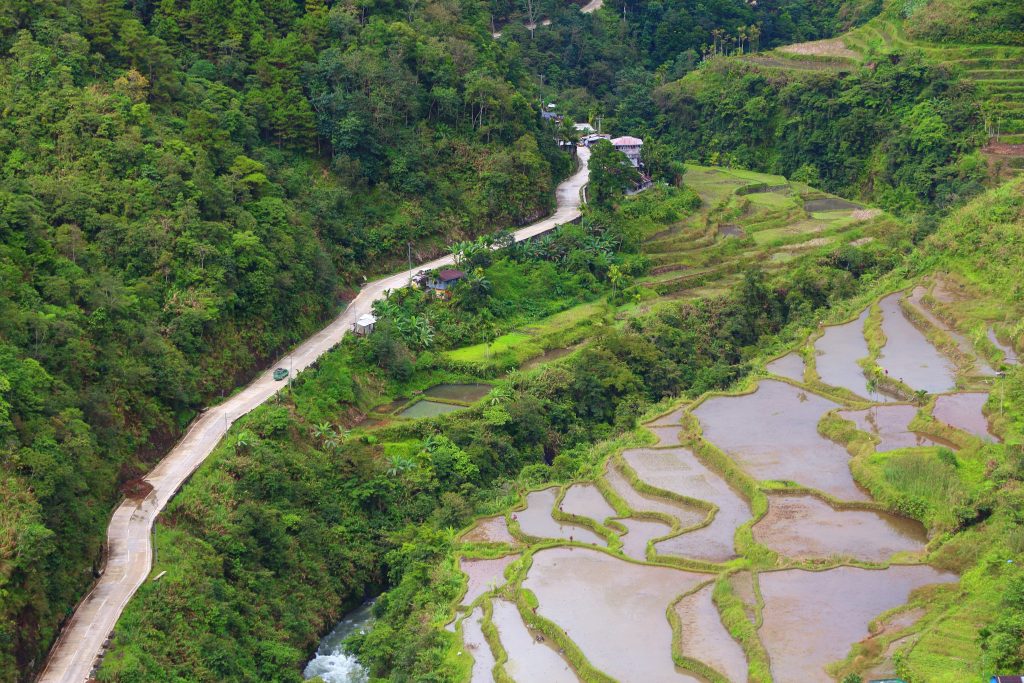
Remember whose land it is. Traditional tinawon rice is planted once a year, so the colours follow a single cycle; in Batad in 2026 the harvest and its rituals, the pre-harvest Tanig and the Bullogan chi Munbotoh procession, came around July. These are the farmers’ rites, not a performance. Stay on paths, follow your guide along the walls, and ask before photographing people, particularly elders and anyone taking part in a ritual. That last point is our advice rather than a published rule.
Sources
- UNESCO World Heritage Centre, Rice Terraces of the Philippine Cordilleras; news releases of 12 December 2001, 3 October 2011 and 27 June 2012; State of Conservation reports 2012 and 2021; ICOMOS evaluation, 1995
- UNESCO Intangible Cultural Heritage, Hudhud chants of the Ifugao
- Philippine Information Agency, as republished by Zigzag Weekly, “Outdoor tourism activities in Banaue, Ifugao town temporarily suspended“, November 2025; Gurupress Cordillera, “Banaue, Ifugao temporarily suspends trekking and hiking activities“, November 2025
- The Philippine Star, “President Marcos urged: Save disaster-hit Batad rice terraces“, 27 June 2026; Al Jazeera, “Climate change presents new threat to Philippines’ UNESCO rice terraces“, 27 July 2026
- Stephen Acabado, “[Time Trowel] Are they still rice terraces?“, Rappler, 6 July 2025; Pia Ranada, “Ifugao Rice Terraces may be younger than we think“, Rappler, 29 April 2015
- S. B. Acabado et al., “The Short History of the Ifugao Rice Terraces: A Local Response to the Spanish Conquest“, Journal of Field Archaeology 44(3), 2019; Archaeology magazine, “One Grain at a Time“, 2018
- Provincial Government of Ifugao, “Getting Here” (undated); Mongabay, “Sustainable livelihood offers a lifeline to Philippines’ dying rice terraces“, August 2021; Wikivoyage, Banaue and Batad